







Wear Particles

Wear Particles describes wear particles as a practical tribology topic: how surfaces interact, how friction, wear, lubrication, material response, and operating environment influence performance, and what engineers should check when applying the concept in real machines or laboratory tests.
- Core idea: wear particles should be interpreted as a system-level contact problem, not as an isolated material property.
- Engineering relevance: load, speed, temperature, surface roughness, chemistry, and lubrication regime can change the observed behavior.
- Good practice: combine measurements with surface inspection and clear reporting of test conditions.
- Failure prevention: use the topic to identify risks early, compare alternatives, and improve reliability.
Table of Contents
What is Wear Particles?
Wear Particles is part of the wider study of friction, wear, contact mechanics, materials, and lubrication. In practical use, the term is most useful when it is connected to a defined contact pair, surface condition, operating load, motion type, and environment.
For engineers, wear particles is not only a definition. It is a way to ask which mechanisms control performance at an interface: elastic or plastic deformation, adhesion, abrasion, fatigue, chemical film formation, lubricant starvation, debris generation, or changes in surface topography.
Why Wear Particles matters in tribology
Wear Particles matters because small changes at the surface can produce large changes in efficiency, temperature, noise, lifetime, and failure risk. A contact that appears acceptable under one load, speed, or lubricant can behave very differently when the regime shifts from full-film lubrication to mixed or boundary lubrication.
| Question | Why it matters |
|---|---|
| What materials and surfaces are in contact? | Hardness, roughness, coating, oxide layers, and chemistry influence friction and wear. |
| What motion occurs? | Sliding, rolling, reciprocating, impact, and vibration activate different damage mechanisms. |
| What lubrication regime is present? | Boundary, mixed, hydrodynamic, and elastohydrodynamic regimes produce different surface separation and film behavior. |
| What environment is involved? | Temperature, humidity, vacuum, contamination, and reactive species can strongly change tribochemical response. |
Engineering factors to consider
- Contact stress and geometry: estimate nominal and local contact pressure, including asperity-scale effects where relevant.
- Surface topography: measure roughness, waviness, texture direction, and surface defects before and after testing.
- Lubricant selection: consider viscosity, additives, supply method, contamination, and compatibility with materials.
- Thermal conditions: frictional heating can change viscosity, hardness, oxidation rate, and tribofilm formation.
- Running-in: early surface adaptation may control the later steady-state response.
- Debris control: wear particles can become a third body, accelerating abrasion or changing friction.
Measurement and interpretation
When evaluating wear particles, report the test configuration clearly: specimen geometry, material grade, surface roughness, lubricant, load, speed, temperature, duration, environment, and repeat count. Tribology results are often system-dependent, so a coefficient of friction, wear scar, or lifetime result should not be treated as a universal property without context.
Useful measurements include friction trace, wear volume or wear rate, surface profilometry, optical or electron microscopy, hardness, lubricant condition, and chemical surface analysis where tribofilms or oxidation are expected.
Detailed background and source material
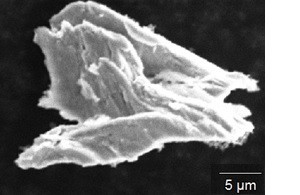
The wear process results in generation of debris, or particles, of various size, shape, color distributions and chemical composition[1, 2, 3]. These distributions are dependent on normal load, sliding speed, environment and many other parameters[4]. The types of wear particles includes plate-shaped particles with aspect ratios of 2-10 produced as a result of accumulated plastic deformations, ribbon-shaped with aspect ratios higher than 10, produced by abrasion and even spherical particles[1]. Formation of spherical particles is not well understood, as they can be found in different types of contacts[5] and combinations of materials[6].

It is believed that the wear debris reflects the wear mechanism of its formation[7, 8]. Reda et al. [9] experimentally studied formation of debris in lubricated sliding steel contacts, and distinguished 6 wear regimes based on characteristic wear particles morphology and composition.
FAQs
What is Wear Particles in simple terms?
Wear Particles is a tribology topic used to understand how contacting surfaces behave under load, motion, lubrication, and environmental conditions.
Why is wear particles important for engineers?

It helps engineers diagnose friction and wear problems, choose materials or lubricants, design tests, and prevent surface-related failures.
How should wear particles be tested?
Testing should reproduce the relevant contact geometry, motion, load, speed, temperature, surface roughness, lubricant, and environment as closely as practical.
What should be reported with wear particles results?

Report materials, roughness, lubricant, load, speed, temperature, duration, environment, friction history, wear measurement method, and post-test surface observations.
See also
References and further reading
- Bhushan, B. Introduction to Tribology. Wiley.
- Stachowiak, G. W., and Batchelor, A. W. Engineering Tribology. Butterworth-Heinemann.
- Hamrock, B. J., Schmid, S. R., and Jacobson, B. O. Fundamentals of Fluid Film Lubrication. CRC Press.
- NIST resources for measurement, materials, and surface characterization.
Last updated: May 2026. Reviewed topic: Wear Particles, tribological performance, measurement, and failure prevention.
References
- [1] Bhushan B. Principles and Applicaion of Tribology. New York: A Wiley-Interscience Publication; 1999.
- [2] Bhushan B. Modern Tribology Handbook. Columbus: CRC Press; 2001.
- [3] Zmitrowicz A. Wear Debris: A Review of Properties and Constitutive Models. 2005;43.
- [4] Soda N. Wear of Some F.C.C. Metals During Unlubricated Sliding. Part II: Effects of Normal Load, Sliding Velocity and Atmospheric Pressure on Wear Fragments. 1975;35.
- [5] Rabinowicz E. The Formation of Spherical Wear Particles. 1977;42.
- [6] Akchuin A, Xu, S.,Tangpong,A., Akhatov,I., Tian-Liu, Weston,W., Zhong,W.-H. Nanoscale Characterization of Wear Particles Produced From CNF-Reinforced HDPE Composites. Houston: In proceedings of IMECE Annual Meeting; 2012.
- [7] Williams J, A. Wear and Wear Particles - Some Fudamentals. 2005;38.
- [8] Roylance B, J., Williams, J.,A., Dwyer-Joyce, R. Wear Debris and Associated Phenomena - Fundamental Research and Practice. 2000;214.
- [9] Reda A, A., Bowen, R. Characteristics of Particles Generated at the Interface Between Sliding Steel Surfaces. 1975;34.
0 Comment