







EHD Film Thickness Explained: Essential Factors You Must Know (2026)
What Is EHD Film Thickness? EHD film thickness is a critical concept in elastohydrodynamic lubrication, describing the thin lubricant layer that separates contacting surfaces under high pressure. Understanding EHD film thickness helps engineers predict wear, friction, and component life. [latexpage]...

Hydraulic Fluids: Critical Insights for Optimal Thermal, Wear, and Viscosity Performance 2026
Hydraulic fluids are used for power transmission in hydraulic machinery. Hydraulic machines use fluid's ability to perform work. So, here is some example of equipment where usually hydraulic fluids are used like excavators and backhoe Loaders, hydraulic brakes, power steering systems,...

Lubricant Viscosity: Critical Insights for Optimal Wear and Friction Control 2026
What is lubricant viscosity? Lubricant Viscosity is the resistance of a fluid to flow. When a fluid is flowing, the molecules comprising it experience friction due to the molecular interaction among them. It means that different fluids with different viscosities...

Lubricant Additives: 12 Critical Mechanisms Enhancing Tribological Performance
What Are Lubricant Additives? The additive content in lubricating oils ranges from just a few parts per million to several percentage points. Depending on the function that the additives develop they may be classed as: Substances intended to improve the...
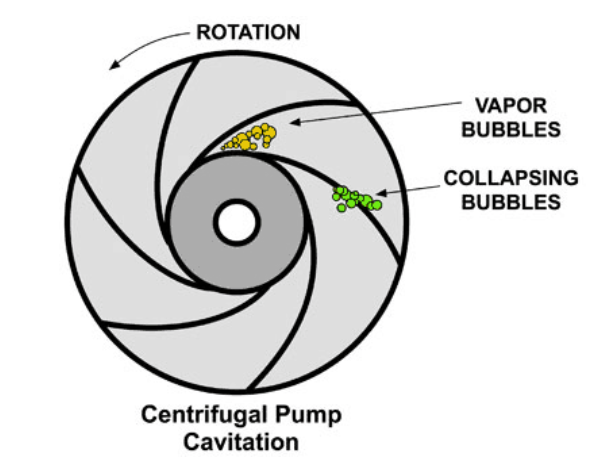
Cavitation: 2026 Key Advantages for Mass Transfer and Surface Treatment
Definition of Cavitation Cavitation is a phenomenon that occurs when a liquid is subjected to a pressure drop that causes its pressure to fall below its vapour pressure. This forms vapour bubbles within the fluid, collapsing as the pressure increases...

Elastohydrodynamic Lubrication: Theory, Types & Practical Guide
What is Elastohydrodynamic Lubrication (EHL)? Elastohydrodynamic lubrication (EHL) describes a lubrication regime where high pressure causes significant elastic deformation of the contacting surfaces, deeply affecting the shape and thickness of the lubricating film. EHL is essential in many machine elements...

Starvation
Starvation describes lubricant starvation as a practical tribology topic: how surfaces interact, how friction, wear, lubrication, material response, and operating environment influence performance, and what engineers should check when applying the concept in real machines or laboratory tests. Core idea:...

What is Lubrication?
Lubrication can be defined as the application of some materials between two objects moving relative to each other to allow smooth operation as much as necessary. Either oil or grease is used for rolling bearings to prevent noise, wear and...

Lubrication and fuel efficiency
Lubrication and fuel efficiency describes lubrication fuel efficiency as a practical tribology topic: how surfaces interact, how friction, wear, lubrication, material response, and operating environment influence performance, and what engineers should check when applying the concept in real machines or...

Reynolds Equation – An Overview
TL;DR: The Reynolds equation is the governing equation for pressure generation in a thin lubricant film between moving surfaces. In tribology it is central to hydrodynamic lubrication and elastohydrodynamic lubrication, because it links lubricant viscosity, surface speed, film thickness and...