







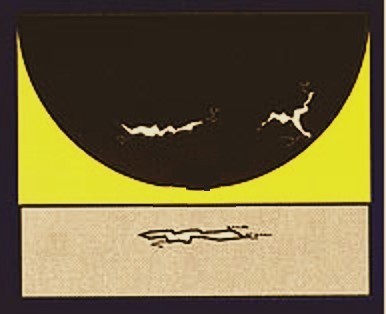
Fatigue Wear: Proven Principles Governing Cyclic Stress and Wear Behavior 2026
Definition of Fatigue Wear: Fatigue wear is a type of wear in which the surface damage of the material takes place due to strain-induced on the surface for a particular number of cycles to a certain critical limit. The fatigue...
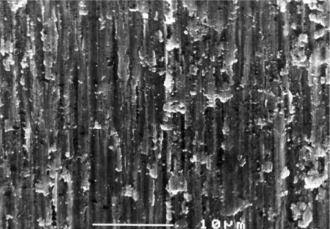
Abrasive Wear: Critical Insights Into Severe Material Loss & Prevention 2026
Definition: Abrasive wear is the type of wear mechanism that results in the disintegration of the material on the surface due to the influence of the hard particle in contact with the surface. It also occurs when a hard...
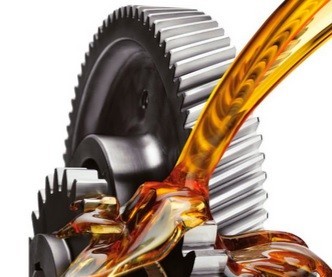
Hydrodynamic Lubrication: How It Ensures High Performance and Reliability 2025
Definition of Hydrodynamic Lubrication (HL) Hydrodynamic lubrication is a term that defines a situation in which two rubbing surfaces are separated by a thin film of a lubricant. This situation is often beneficial and lubrication is used to reduce friction...

Elastohydrodynamic Lubrication: Theory, Types & Practical Guide
What is Elastohydrodynamic Lubrication (EHL)? Elastohydrodynamic lubrication (EHL) describes a lubrication regime where high pressure causes significant elastic deformation of the contacting surfaces, deeply affecting the shape and thickness of the lubricating film. EHL is essential in many machine elements...
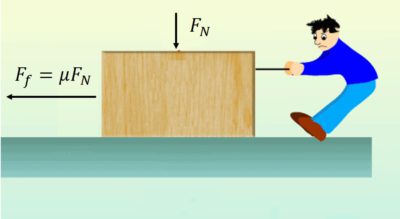
Coefficient of Friction: Critical Factors Influencing Tribological Performance 2026
What is a Coefficient of Friction? Friction is a force resisting relative motion and may occur at the interface between the bodies, but may also occur within the bodies. The concept of friction coefficient was first formulated by Leonardo da...
Rolling Contact Fatigue
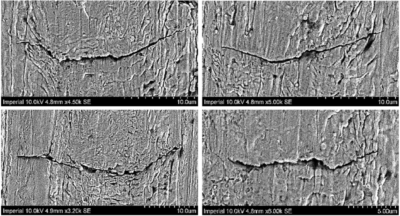
Rolling contact fatigue (RCF) is a fatigue failure mechanism in rolling contacts where repeated Hertzian stresses create cracks near or below the surface. As cracks grow, material can detach as pits, spalls or flakes. RCF is a critical life-limiting process...

Generalized Reynolds Equation: Derivation
TL;DR: The generalized Reynolds equation is an extended lubrication equation used when the classical Reynolds equation is too simple for real contacts. It accounts for effects such as pressure-dependent viscosity, temperature-dependent density, non-Newtonian lubricant behavior, and film-thickness variation in heavily...
Greenwood and Williamson Contact Model
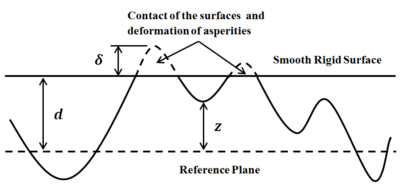
Greenwood and Williamson Contact Model describes Greenwood Williamson contact model as a practical tribology topic: how surfaces interact, how friction, wear, lubrication, material response, and operating environment influence performance, and what engineers should check when applying the concept in real...
Adhesive Wear: Advanced Concepts Every Engineer Should Know 2026
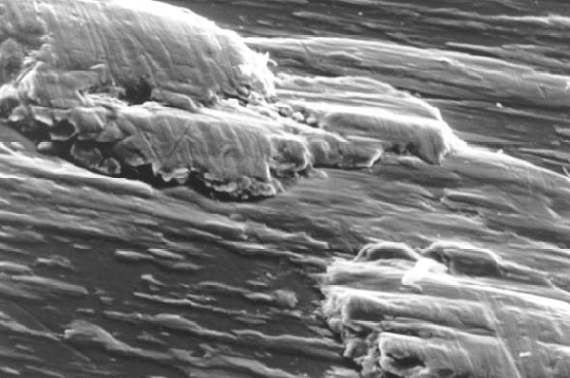
Definition: Adhesive wear is a type of wear that is caused on the surface of two materials that are in sliding contacts due to the large atomic bonding forces at the surface in comparison to the surrounding area of the...
Friction
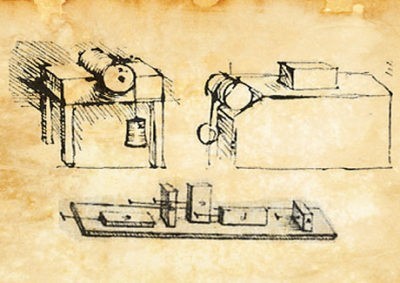
Friction is the resistance that opposes relative motion between surfaces, fluids or bodies in contact. It is not a fundamental force by itself; it emerges from surface roughness, adhesion, deformation, lubricant shear, chemical interactions and energy dissipation. Friction can be...