







TriboNet Weekly: Global Tribology, Lubrication & Surface Engineering Intelligence Aug 03 – 08 , 2026
Week: 03–08 August 2026
⚡ Key Insights of the Week
- AI is moving from predictive maintenance toward tribo-informatics and materials discovery. A new Wear review published for 1 August examines machine learning across friction, wear and lubrication, while new work in Tribology International combines machine learning with DFT to predict superlubrication behaviour.
- Electrification is creating a new class of tribological problems. New research shows that electrical potential can directly influence grease-lubricated steel wear, highlighting the importance of electrically aware lubricant and bearing design for EVs and electrically driven machinery.
- Lubricant supply-chain pressure intensified. Lubes’n’Greases reported that Motiva, SK Enmove and Avista Oil announced price increases linked to tight global availability of Group II+ and Group III base oils.
- Surface engineering is becoming increasingly intelligent. Research this week explored machine-learning-assisted surface-texture optimisation, electrostatically controlled oil droplets and laser-engineered surfaces for friction and wear reduction.
- Lubrication research is becoming more multifunctional. New studies combined friction reduction with fluorescence-based monitoring, antibacterial functionality, corrosion protection and self-lubrication rather than treating lubrication as simply a friction-reduction problem.
Executive Summary
During 03–08 August 2026, tribology research increasingly reflected the convergence of mechanics, data science, surface chemistry and electrification.

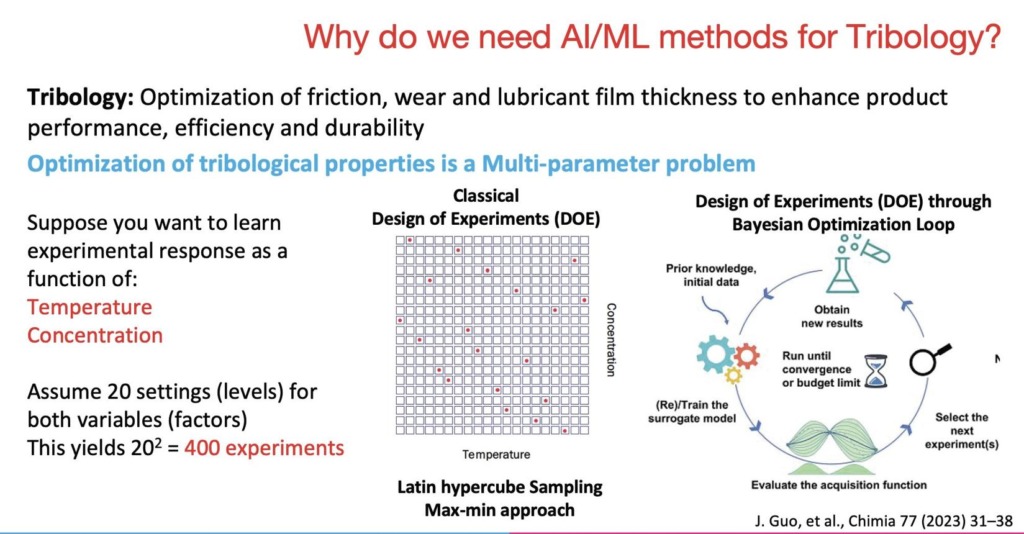
The publication of a new review on machine learning in tribo-informatics and several August papers applying ML, DFT and optimisation algorithms demonstrates a shift from conventional experimental trial-and-error toward data-driven tribological design.
At the same time, electrification is changing the operating environment of conventional tribosystems. Electrically induced wear in lubricated steel contacts is particularly relevant to EV bearings and other electrically driven systems.
Industrial lubrication markets also remained under pressure, with fresh price increases for Group II+ and Group III base oils reported during the week.
1. AI and Tribo-Informatics Move Further into Tribology

One of the most important developments this week was the publication of:
“Applications of machine learning in tribo-informatics: Current status and future perspective” in Wear, Volume 598.

The work describes tribo-informatics as the integration of tribology with:
- Artificial intelligence
- Machine learning
- Data science
- Information technology
- Predictive modelling
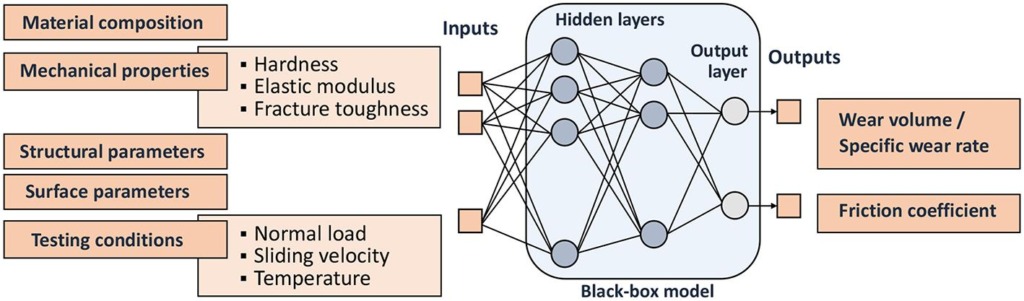
The motivation is straightforward: modern tribological experiments generate large datasets involving load, speed, temperature, roughness, friction, wear and lubrication conditions, making conventional analysis increasingly difficult.
The paper reviews how ML is being used to:
- Predict friction and wear
- Classify wear mechanisms
- Optimise tribological materials
- Analyse large experimental datasets
- Support predictive maintenance
- Develop tribological digital models
Why it matters

The direction is moving from:
Experiment → measurement → interpretation
toward:
Experiment → data → machine learning → prediction → optimisation
This could eventually enable tribometers to become data-generating intelligent systems, rather than simply measurement instruments.
2. Machine Learning + DFT for Superlubrication
A particularly interesting August paper in Tribology International investigated:
“Prediction of superlubrication performance and friction mechanism of transition metal and nitrogen-doped bilayer graphene driven by machine learning.”
The researchers combined:
- Density functional theory (DFT)
- Machine learning
- Electronic-structure analysis
- Friction-barrier calculations
The work identified adhesion work as an important descriptor for predicting the friction barrier.
The significance is that ML is not being used merely as a statistical fitting tool. It is being coupled with atomistic physics to identify the mechanisms controlling friction.
Engineering direction
This suggests a future workflow:
Atomic simulation → ML descriptor → material screening → experimental validation
Such approaches could significantly reduce the number of candidate coatings or lubricant additives requiring physical testing.
3. Electrification Creates New Tribological Challenges
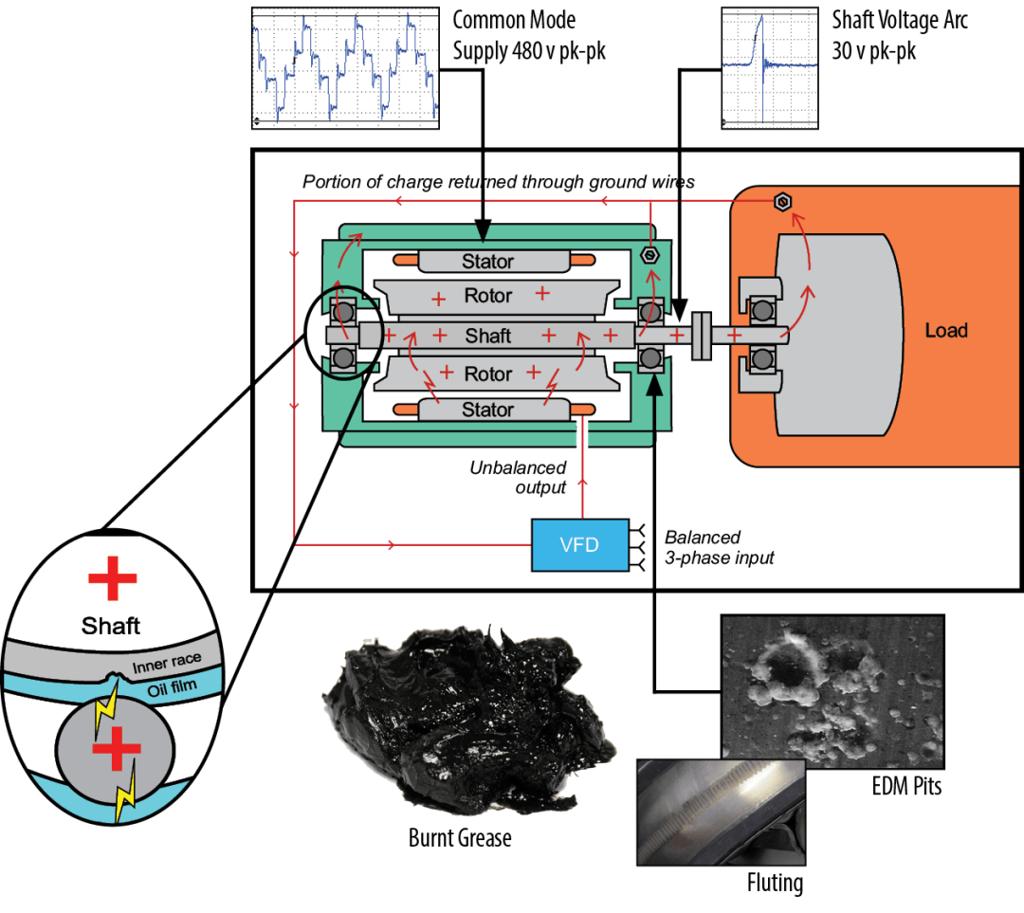
A new Wear paper, “Electrified performance characteristics of greases and their effects on wear mechanisms of steels,” examined how electrical conditions influence lubricated contacts.
The study evaluated grease behaviour through:
- Rheology
- Dielectric response
- Charge-transfer kinetics
- Friction
- Wear under direct current
A key finding was that electrified wear was related to a combination of:
normal load + grease adhesive energy + electrical potential.
The study also reported that wear in grease-lubricated steel contacts could be predicted from these combined parameters.
Why this is important for EVs
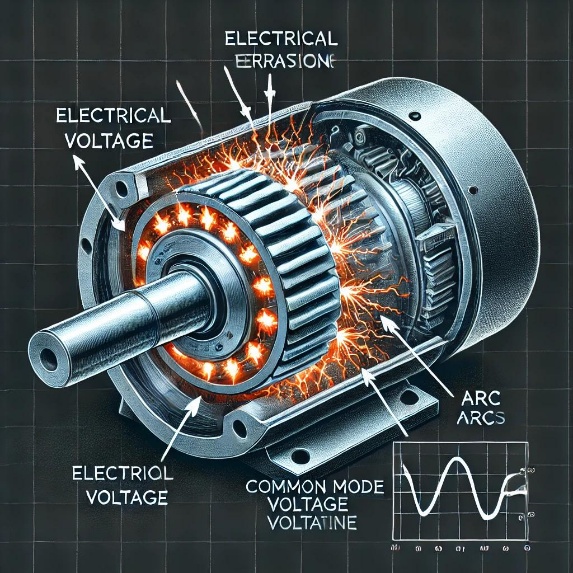
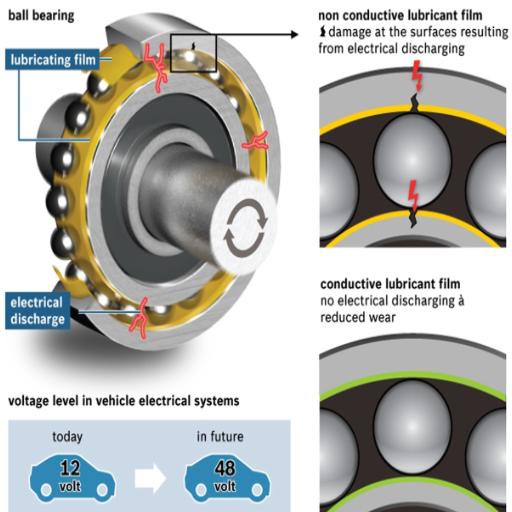
Electric drivetrains introduce electrical potentials that conventional bearing systems were not designed around.
Potential consequences include:
- Electrical discharge
- Surface pitting
- Fluting
- Accelerated bearing degradation
- Lubricant degradation
- Changes in tribofilm behaviour
Therefore, electrical tribology is becoming an increasingly important part of EV reliability engineering.
4. Lubricant Supply Pressure Continues
The industrial lubrication market remained under pressure during the week.
Lubes’n’Greases reported on 5 August that Motiva, SK Enmove and Avista Oil announced posted-price increases, citing tight global availability of Group II+ and Group III base oils.
This is particularly important because Group III stocks are heavily used in:
- Automotive engine oils
- EV fluids
- Industrial lubricants
- High-performance formulations
- Synthetic-blend products
Crude-oil context
WTI was reported at approximately US$81.96/bbl on 3 August, according to FRED daily data.
By 7 August, market reporting placed Brent around US$84.8/bbl and WTI around US$78.2/bbl, illustrating the significant volatility during the week.
Tribology implication
The important issue is not simply crude price.
Base-oil availability → lubricant formulation cost → lubricant qualification → industrial operating cost
is becoming an increasingly important chain for lubricant manufacturers and end users.
5. Intelligent Surface Texturing for Friction Reduction
A new study in Tribology International investigated:
“Intelligent optimization design of surface textures in friction pairs.”
The researchers used a GA-PSO algorithm — combining genetic algorithms and particle-swarm optimisation — to optimise the distribution of surface textures.
The objective was to simultaneously improve:
- Friction reduction
- Load-carrying capacity
- Hydrodynamic lubrication
The study found that optimal textures were concentrated mainly around the inlet region and central portion of the lubricated contact.
Why this matters
Surface texturing is evolving from:
“Add dimples to reduce friction”
toward:
“Optimise the geometry, location and distribution of each texture according to operating conditions.”
This is an important development for:
- Bearings
- Seals
- Pistons
- Mechanical face seals
- MEMS
- Biomedical devices
6. On-Demand Lubrication Through Electrostatic Control
Another particularly interesting study investigated:
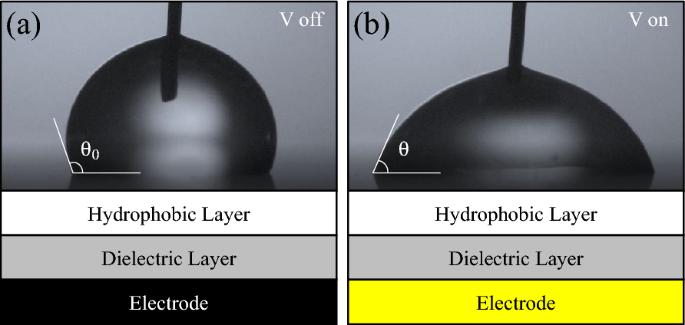
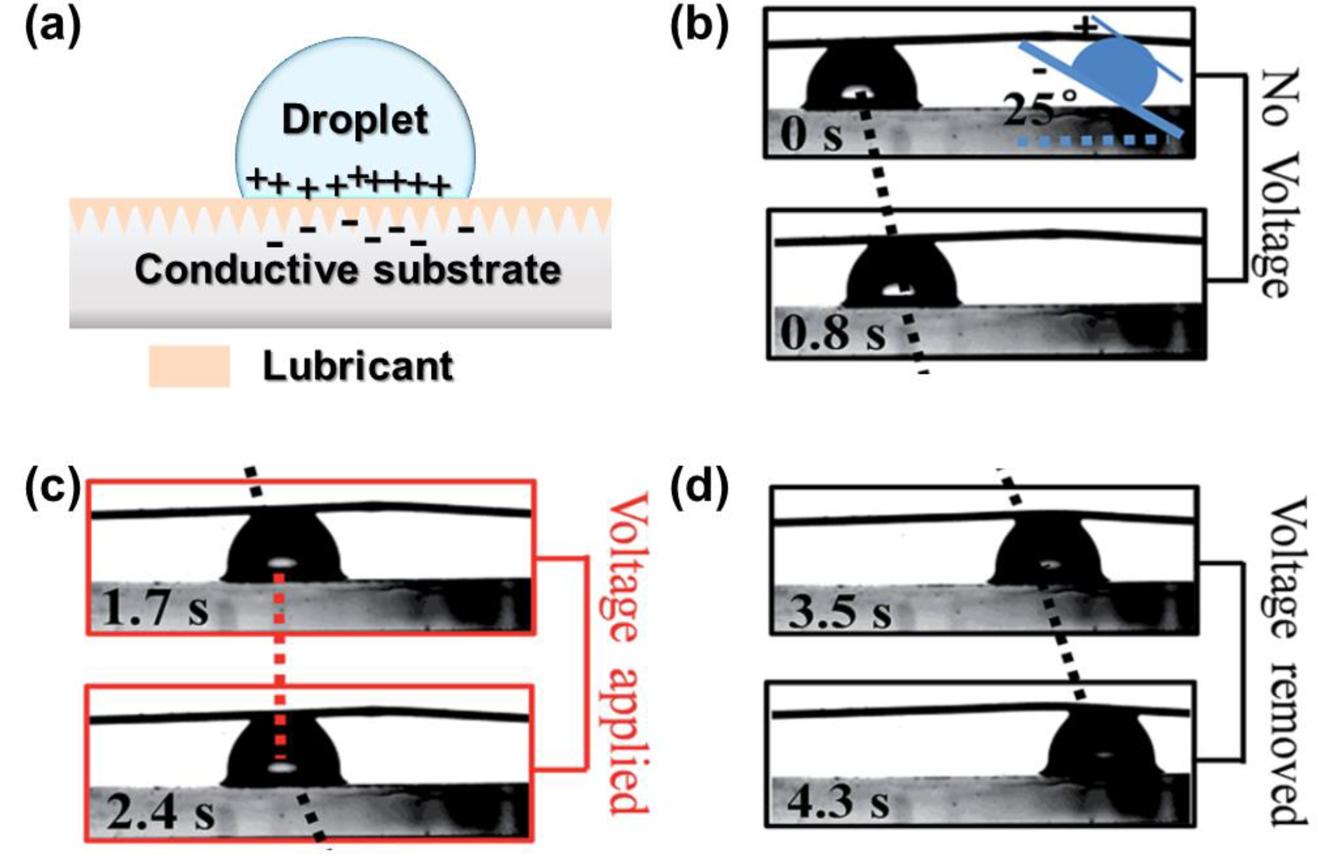
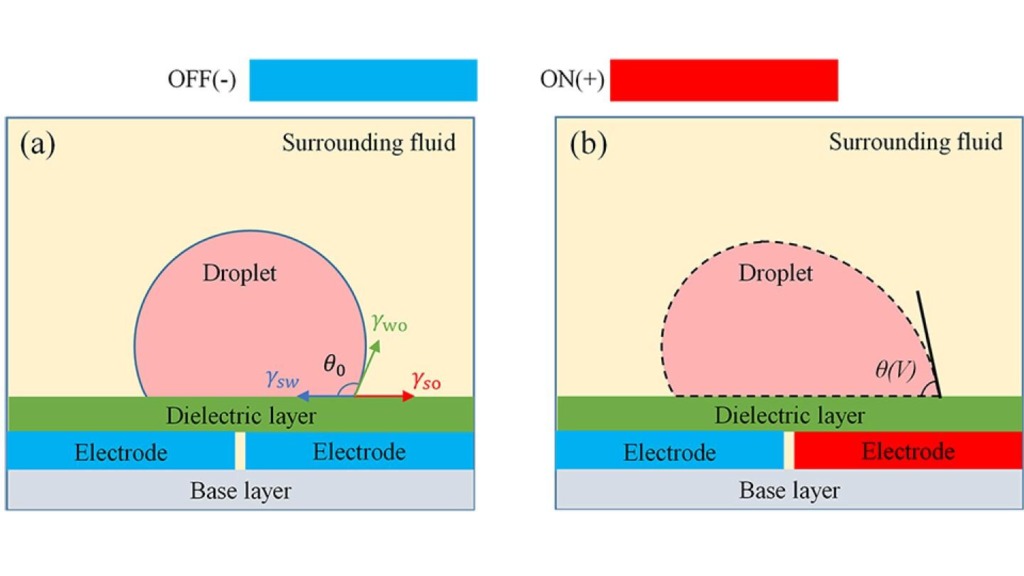
“Electrostatic wetting and driving of oil droplets for friction modulation.”
The research demonstrated that electrostatic effects can modify oil-droplet wettability and enable the movement of droplets on PTFE surfaces.
The concept enables on-demand lubrication, where lubricant droplets could potentially be actively transported toward the region where lubrication is required.
Potential applications
- Microfluidics
- MEMS
- Precision mechanisms
- Adaptive lubrication
- Smart surfaces
- Low-volume lubrication systems
This represents a move toward active lubrication, rather than passive lubricant supply.
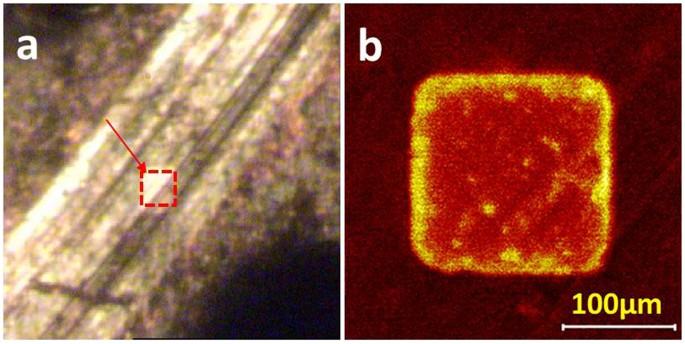
7. Tribofilms Can Now Be Visualised During Lubrication
A new open-access study investigated:
“Fluorescently labeled organic friction modifiers with dual functions: Adsorption imaging and friction reduction.”
The researchers designed organic friction modifiers that simultaneously provide:
- Friction reduction
- Fluorescence-based visualisation of the adsorbed film
The study showed that adsorption increased with concentration and that different molecular architectures produced different surface-coverage characteristics.
One polymeric modifier produced relatively uniform and shear-resistant adsorbed films.
Why this is significant
Traditional tribology often measures:
COF → wear → surface analysis
This approach moves toward:
COF + wear + real-time/interfacial film visualisation
which can provide much stronger mechanistic understanding of boundary lubrication.
8. Electrically Controlled and Self-Regulating Lubrication
Research activity during the week also continued toward adaptive and multifunctional lubrication.
The August Tribology International issue includes studies on:
- Self-lubricating core-shell microcapsules
- Organic friction modifiers
- Biolubricants
- Corrosion-resistant lubrication
- Nano-engineered surfaces
- Adaptive tribofilms
- Electrostatic lubrication
- Surface texturing
This suggests a broader trend:
Traditional lubrication
Lubricant → reduce friction
Emerging intelligent lubrication
Lubricant/material → sense → respond → adapt → protect
That distinction could become increasingly important in autonomous machinery, EVs, robotics and biomedical systems.
9. Multifunctional Biolubricants
The August issue of Tribology International also includes research on:
“A dual-functional biolubricant with integrated super-lubrication and antibacterial properties.”
This is particularly interesting because the lubricant is being designed to provide both:
- Extremely low friction
- Antibacterial functionality
rather than treating biological functionality as separate from tribological performance.
Potential applications
- Biomedical devices
- Prostheses
- Medical mechanisms
- Food-processing machinery
- Environmentally sensitive applications
This reinforces the growing overlap between biotribology, sustainable lubrication and advanced materials.
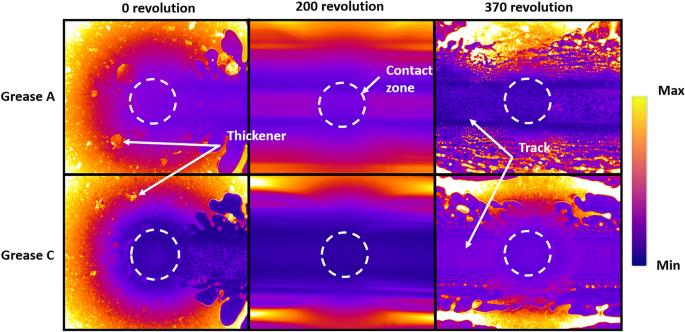
10. Grease Chemistry and Friction
Another important August study examined:
“Friction in grease lubricated rolling/sliding contacts – Influence of thickener type and a comparison among grease, bled oil, and base oil.”
Six grease formulations based on the same PAO10 base oil and NLGI grade were compared.
The researchers examined:
- Friction curves
- Traction curves
- Film thickness
- Oil bleeding
- Temperature effects
- Entrainment speed
The study showed that thickener chemistry can significantly affect friction, even when the base oil and nominal grease grade are held constant.
Engineering message
Grease should not simply be treated as:
“oil + thickener.”
The thickener structure influences:
oil release → film formation → friction → temperature response → wear
11. Surface Engineering: Laser Nitriding + Laser Polishing
A new study investigated the combined effects of laser nitriding (LN) and laser polishing (LP) on Zr-based metallic glasses.
Under dry friction conditions:
- Laser nitriding reduced wear rate by 58.1%
- Laser polishing reduced wear rate by 77.2%
relative to the as-cast metallic glass.
Under lubricated conditions, both treatments produced extremely mild wear.
Why this is interesting
It demonstrates that surface engineering can modify tribological performance without changing the bulk material.
The direction is:
Bulk material → engineered surface → controlled tribological response
This is highly relevant to aerospace, biomedical and precision engineering components.
12. Railway Tribology: Long-Duration Wear and Oxide Films
A new Wear study examined railway steels under long-duration dry twin-disc testing.
The research found that:
- COF decreased significantly with increasing cycles under low-slip conditions.
- Oxide-film formation reduced COF.
- Material mass loss followed a similar decreasing trend.
- Bainitic steel showed better wear resistance and stress-accommodation capability.
The tested materials had hardness values of approximately:
| Material | Hardness |
|---|---|
| Cast bainitic wheel | 351 ± 20 HV₀.₅ |
| Forged pearlitic wheel | 363 ± 11 HV₀.₅ |
| Premium rail | 393 ± 11 HV₀.₅ |
This highlights the importance of tribofilm evolution and running-in behaviour in railway contacts.
13. Wear Modelling Incorporates Frictional Heating
Another Wear paper introduced a generalised local wear model for tyre rubber.
The proposed model explicitly considered frictional heating, an effect often neglected in local wear models.
The researchers:
- Compared five friction models
- Used LAT100 and Lambourn testing platforms
- Analysed wear distribution
- Used FEA
- Evaluated both time-based and distance-based wear rates
The model demonstrated robust performance across both testing approaches.
Key lesson
Wear is not purely mechanical.
Friction → heat → material-property changes → altered wear
must increasingly be considered in predictive wear models.
14. New Tribology Event: ICME 2026
The 14th International Conference on Mechanical and Manufacturing Engineering (ICME 2026) took place online on 5–6 August 2026.
Tribology was explicitly included as one of its technical tracks, alongside:
- Advanced manufacturing
- Materials science
- Automotive engineering
- Surface engineering
- Polymer/metal/ceramic composites
- Condition monitoring
- Fatigue and fracture
- Oil and gas engineering
The conference illustrates the increasing integration of tribology with manufacturing, materials and industrial automation.
15. AI in Tribology Gets a Dedicated Reference Book
A new book, Artificial Intelligence in Tribology – Advances in Surface Engineering and Tribology, was released in August 2026.
The book covers:
- Machine learning
- Neural networks
- Optimisation
- Friction prediction
- Wear prediction
- Lubrication modelling
- Tribosystem design
- Materials selection
It is 288 pages and was released on 6 August 2026.
This is notable because AI in tribology is transitioning from individual research papers toward a more established research discipline.
Weekly Industry Snapshot
| Segment | Weekly Direction |
| Crude oil | Volatile |
| Group II+ / III base oils | ↑ Price pressure |
| Premium lubricants | ↑ Cost pressure |
| AI / tribo-informatics | ↑ Strong growth |
| Electrified tribology | ↑ Rapidly developing |
| Surface texturing | ↑ Active research |
| Smart lubrication | ↑ Emerging |
| Sustainable lubrication | ↑ Expanding |
| Advanced coatings | ↑ Active |
| Robotics tribology | ↑ Strong |
Research Themes of the Week
| Research theme | Key development |
| AI & tribo-informatics | ML increasingly used for friction/wear prediction |
| AI + DFT | ML-assisted superlubrication material screening |
| Electrified tribology | Electrical potential linked to lubricated wear |
| Surface optimisation | GA-PSO used for texture design |
| Active lubrication | Electrostatic control of oil droplets |
| Tribofilm characterisation | Fluorescence-enabled adsorption imaging |
| Grease tribology | Thickener chemistry affects friction |
| Laser surface engineering | LN/LP substantially reduced wear |
| Sustainable lubrication | Biolubricants with multifunctional properties |
| Wear modelling | Frictional heating incorporated into tyre-wear prediction |
Quantitative Weekly Snapshot
| Metric | Value |
| WTI on 3 Aug | US$81.96/bbl |
| Brent around 3 Aug | US$87.38/bbl |
| Brent around 7 Aug | ~US$84.8/bbl |
| WTI around 7 Aug | ~US$78.2/bbl |
| Laser-nitrided metallic glass wear reduction | 58.1% |
| Laser-polished metallic glass wear reduction | 77.2% |
| Railway cast bainitic wheel hardness | 351 ± 20 HV₀.₅ |
| Forged pearlitic wheel hardness | 363 ± 11 HV₀.₅ |
| Premium rail hardness | 393 ± 11 HV₀.₅ |
| AI-in-Tribology book | 288 pages |
| ICME 2026 | 5–6 August 2026 |
Oil-price data:
Tribological measurements:
Engineering Insight of the Week
Tribology is moving from passive friction and wear control toward intelligent interface engineering.
The major transition is becoming clear:
Traditional tribology
Material → lubricant → friction → wear
↓
Advanced tribology
Material + surface + lubricant + electrical environment + sensing + AI
↓
Emerging intelligent tribology
Sense → predict → optimise → adapt → self-protect
The combination of AI/ML, advanced coatings, surface texturing, smart lubrication and real-time sensing is likely to become one of the defining directions of tribology over the next decade.
Weekly Summary
- AI and tribo-informatics were among the strongest research themes, with ML increasingly being applied not only to predictive maintenance but also to material discovery and fundamental friction modelling.
- Electrification is reshaping tribology, particularly through electrically induced wear in lubricated bearings and steel contacts relevant to EV drivetrains.
- Group II+ and Group III base-oil availability remained a major industrial concern, with several producers announcing price increases during the week.
- Surface engineering became increasingly computational, with optimisation algorithms being used to determine where and how surface textures should be placed.
- Smart lubrication technologies are emerging, including electrostatically driven oil droplets and fluorescently visualised boundary-lubrication films.
- Multifunctional materials are gaining momentum, combining lubrication with antibacterial activity, corrosion protection, self-lubrication and adaptive behaviour.
- Advanced laser surface treatments demonstrated substantial wear-rate reductions, reinforcing the importance of engineered surfaces rather than relying exclusively on bulk-material properties.
References / Sources
- Wear – Applications of machine learning in tribo-informatics
- Tribology International – August 2026 Volume 220
- Tribology International – ML prediction of superlubrication
- Wear – Electrified performance of greases
- Lubes’n’Greases – Base Oil Price Reports
- FRED – WTI Crude Oil Prices
- ICME 2026 – International Conference on Mechanical & Manufacturing Engineering
- TriboNet – AI and lubricant formulation
0 Comment