






TriboNet Weekly: Global Tribology, Lubrication & Surface Engineering Intelligence | Aug 17–22, 2026
Week: 17–22 August 2026
⚡ Key Insights of the Week
- Electronic waste entered the lubricant-development pipeline. Tin-rich solder dross was converted into SnO₂ nanoparticles that reduced friction by up to 49.3% and wear-scar diameter by up to approximately 66% relative to neat PAO.
- Railway tribology exposed the microstructural origins of wheel damage. New work on heavy-haul wheels identified white etching layers (WEL), brown etching layers (BEL), oxidation and crack development under severe thermo-mechanical conditions.
- Water-based lubrication is becoming increasingly multifunctional. New ionic-liquid systems combine friction reduction, wear protection, corrosion resistance and antibacterial behaviour.
- Physics-informed approaches continue to reshape wear prediction, offering a route toward useful models even when experimental wear datasets are sparse.
- Space tribology remains an important engineering frontier, with lunar dust and regolith highlighting the need for abrasion-resistant hard coatings and polymer/coating tribopairs.
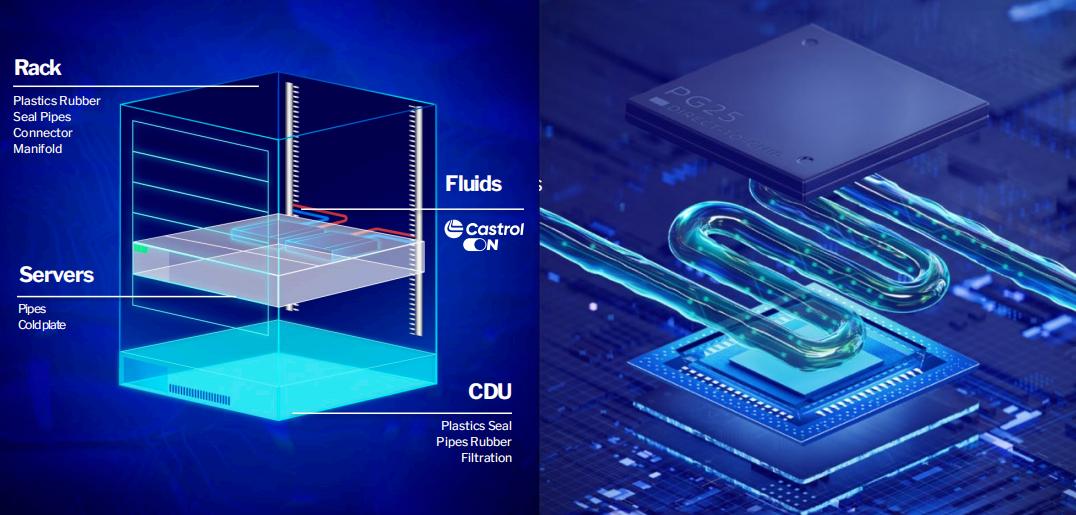
- Thermal-management fluids are becoming a new frontier for lubricant companies. Castrol announced NVIDIA validation of two direct-to-chip cooling fluids for AI infrastructure.
- Automotive lubricant partnerships continue to evolve toward electrification. Shell and Hyundai renewed their global collaboration for another five years, with future work including e-fluids and thermal management.
Executive Summary
The week of 17–22 August 2026 demonstrates how rapidly the boundaries of tribology are expanding.

At one end of the spectrum, researchers are converting electronic manufacturing waste into functional lubricant additives. At another, engineers are examining how severe wheel–rail contacts transform steel microstructures and ultimately contribute to fatigue cracking.
Meanwhile, lubricant development is becoming increasingly multifunctional. The newest formulations are expected not simply to reduce friction but to provide combinations of wear resistance, corrosion protection, thermal management, sustainability and even antibacterial performance.
Industry is undergoing a similar transition. Castrol’s latest data-centre development shows that fluid-engineering expertise traditionally associated with lubrication is becoming increasingly relevant to AI infrastructure and electronics cooling. Shell and Hyundai’s renewed partnership similarly points toward a future where lubricant companies increasingly work on e-fluids, thermal management and electrified mobility, alongside conventional engine lubrication.
The broader message this week is therefore:

Tribology is evolving from friction and wear control into the engineering of complete interfaces, fluids and surface systems.
1. From Electronic Waste to High-Performance Nanolubricants
One of the strongest sustainability stories of the week came from research made available online on 17 August 2026 examining the conversion of solder-dross waste into functional nanolubricants.
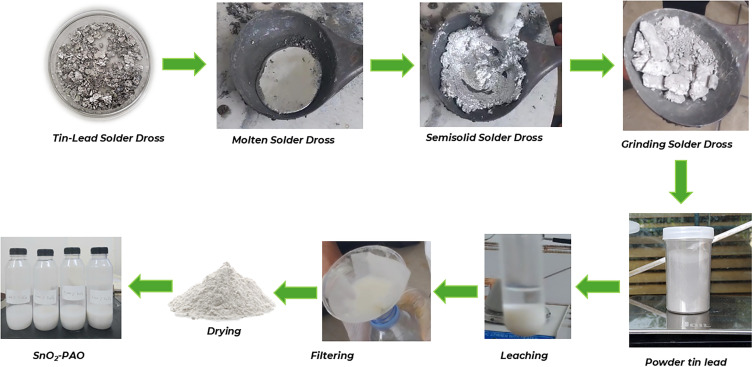
The researchers recovered tin from electronic solder waste and converted it into rutile SnO₂ nanoparticles through nitric-acid leaching, precipitation and oxidation.

The resulting nanoparticles were dispersed in PAO oil at concentrations ranging from 1 to 7 wt.%.
The results were significant.
Pure PAO produced an average coefficient of friction of approximately 0.148.
With 7 wt.% SnO₂, the coefficient of friction decreased to approximately:

0.075
representing a:
49.3% reduction in friction.
Wear protection also improved substantially.
The wear-scar diameter decreased from approximately:
432 μm — pure PAO
to a minimum of:
147 μm — 5 wt.% SnO₂
equivalent to approximately a 66% reduction in wear-scar diameter.
The researchers attributed the improvement to a combination of nanoparticle-assisted interfacial behaviour, tribofilm formation and third-body effects.
Why it matters
This research connects two normally separate engineering challenges:
electronic waste management
and
energy-efficient lubrication.
The pathway becomes:
Solder waste → Sn recovery → SnO₂ nanoparticles → lubricant additive → reduced friction and wear
This provides an interesting example of circular tribology, where waste from one industrial sector becomes a functional tribological material for another.
TriboNet Takeaway
Future sustainable lubricants may increasingly derive performance-enhancing additives from industrial waste streams rather than virgin raw materials.
Further reading: Original research – Conversion of Solder Dross Waste to Functional Nanolubricants
Link: https://www.sciencedirect.com/science/article/pii/S2590123026035280#fig0002
2. Heavy-Haul Railway Wheels Reveal the Microstructure Behind Thermal-Fatigue Damage
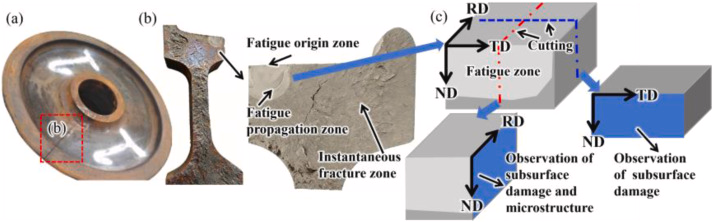
A new Wear study available online on 17 August 2026 investigated the mechanisms responsible for thermal-fatigue damage in heavy-haul train wheels.
Heavy-haul wheels experience a particularly severe combination of:
- high axle loads,
- rolling contact,
- braking,
- frictional heating,
- large slip ratios,
- repeated thermal cycling.
The researchers identified the formation of both:
White Etching Layers (WELs)
and
Brown Etching Layers (BELs)
on damaged wheel surfaces.
These near-surface microstructural transformations were accompanied by fatigue cracking, oxidation and material spalling.
The work highlights how friction does more than simply remove material.
Repeated tribological loading can progressively modify the material itself:
friction → heat + deformation → microstructural transformation → altered mechanical properties → crack initiation → crack propagation
Oxide layers were also observed around crack regions, indicating additional interaction between thermal, mechanical and environmental processes.
Why it matters
For heavy-haul railway systems, the wheel cannot simply be treated as an unchanged bulk steel component.
The actual engineering interface continuously evolves during service.
Understanding WEL/BEL formation therefore has direct implications for:
- wheel-life prediction,
- rolling-contact fatigue,
- inspection intervals,
- braking conditions,
- steel selection,
- railway safety.
TriboNet Takeaway
The wheel–rail interface is not static: repeated friction and thermal loading continuously engineer—and sometimes damage—the near-surface microstructure.
Further reading: Original research – Mechanism of thermal fatigue damage in heavy haul train wheel
Link: https://www.sciencedirect.com/science/article/pii/S0043164826004709#fig1
3. Water-Based Ionic-Liquid Lubricants Become Multifunctional
Another important research direction this week is the development of structure-engineered ionic liquids for water-based lubrication.
Researchers designed two protic ionic liquids with different molecular structures to investigate how molecular architecture influences interfacial lubrication.
The results demonstrate that molecular design can influence:
- lubricant stability,
- surface wettability,
- adsorption,
- corrosion protection,
- friction,
- wear,
- antibacterial behaviour.
The reported system achieved:
>70% friction reduction
and
>90% improvement in anti-wear performance
under steel–steel contact conditions, even at contact stresses reaching approximately:
2.72 GPa.
The antibacterial rate against Staphylococcus aureus reached approximately:
99.9%.
Why water-based lubrication?
Water offers several attractive properties:
excellent cooling + low viscosity + low flammability + availability
but its limited film-forming ability restricts conventional tribological applications.
The new approach is therefore:
Water + engineered ionic additive → adsorption + tribofilm → load support + friction reduction
The study also demonstrates something increasingly important in modern lubricant research:
lubricants are becoming multifunctional materials.
TriboNet Takeaway
Future lubricants may simultaneously control friction, wear, corrosion, temperature and microbial contamination.
Further reading: Original research – Structure engineering-driven sustainable ionic liquid water-based lubricants
4. Physics and Machine Learning Converge for Wear Prediction
Machine learning continues to move into tribology and manufacturing, but an important transition is occurring.
Instead of relying entirely on black-box algorithms, researchers are increasingly combining:
physical wear models + experimental measurements + machine learning.
Physics-guided Gaussian-process approaches are particularly interesting because tribological datasets are often:
- small,
- expensive,
- noisy,
- nonlinear,
- system-specific.
Recent work on physics-guided Gaussian-process regression demonstrated that useful tool-wear forecasting could be achieved with only a small fraction of experimentally labelled tool-life data.
One reported framework could forecast wear using approximately:
9.5% of the tool’s life span
as initial labelled training information.
This addresses one of the major barriers to AI-based tribology:
How do we train useful models when we do not have millions of tribological experiments?
Future direction
Rather than:
Physics OR AI
the emerging model is:
Physics + experimental data + AI + uncertainty estimation
TriboNet Takeaway
The most useful AI models for tribology may be those that understand what the physics will and will not allow.
Further reading: Physics-guided Gaussian-process wear prediction – Scientific Reports
5. Lunar Dust Continues to Challenge Space Tribology
Lunar exploration introduces one of the most unusual tribological contaminants:
regolith.
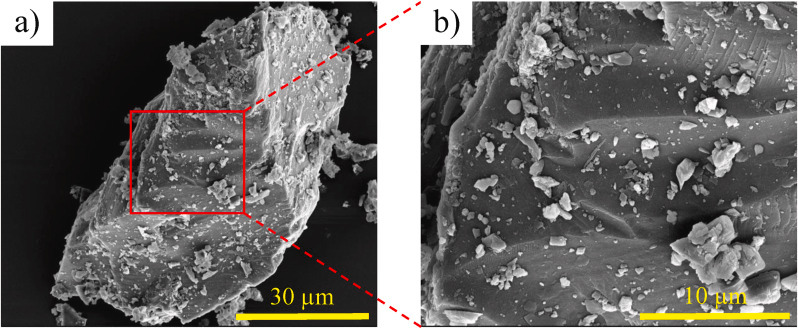
Lunar regolith consists of abrasive mineral fragments, rock particles, glassy material and agglutinates that can penetrate mechanical interfaces.
Potentially vulnerable systems include:
- rover bearings,
- robotic joints,
- seals,
- gears,
- actuators,
- deployment mechanisms.
Recent 2026 research on hard coatings and polymer interfaces under simulated lunar regolith demonstrated substantial differences between candidate tribopairs.
Self-mated DLC produced coefficients of friction around:
0.18–0.23
under the tested fine-regolith conditions.
Pairing PS400 with a polymeric ATSP counterface reduced pin wear by approximately:
60%
relative to the PS400 self-mated configuration.
The results illustrate an important design principle for lunar machinery:
the best solution may not simply be the hardest material.
Instead, carefully selected:
hard coating + compliant polymer counterface
combinations may provide better resistance to abrasive dust ingress.
TriboNet Takeaway
Future lunar mechanisms will need to be designed for the dust environment from the beginning—not protected from it as an afterthought.
Further reading: Original research – Tribological performance of hard coatings and polymer interfaces under lunar regolith
Link: https://www.sciencedirect.com/science/article/pii/S0043164826001596#fig2
6. Surface Engineering Continues Moving Toward Multifunctionality
The broader 2026 coating literature continues to demonstrate a shift from coatings designed primarily for hardness toward surfaces engineered simultaneously for:
friction + wear + corrosion + wettability + environmental stability.
This is particularly important for:
- marine components,
- aerospace mechanisms,
- bearings,
- biomedical devices,
- energy systems,
- precision machinery.
Modern surface engineering therefore increasingly asks:
Can the surface adapt the interface without changing the structural material underneath?
This allows engineers to separate:
bulk requirements
from
interfacial requirements.
A structural alloy can provide strength and toughness while the engineered surface provides low shear strength, corrosion resistance or controlled wettability.
INDUSTRIAL BULLETINS
7. Castrol Cooling Fluids Validated for NVIDIA AI Infrastructure
One of the most interesting industrial developments of the week came not from a conventional bearing, engine or gearbox—but from an AI data centre.
On 18 August 2026, Castrol announced that two of its direct-to-chip cooling fluids:
Castrol ON PG25
and
Castrol ON PG25T
had been validated to meet NVIDIA requirements for AI-factory and data-centre infrastructure.
Direct-to-chip cooling circulates fluid through cold plates positioned directly against high-heat components such as:
- CPUs,
- GPUs,
- AI accelerators.
The validation considered factors including:
- corrosion resistance,
- thermal stability,
- dilution-water quality,
- propylene-glycol purity,
- compatibility with metals,
- compatibility with polymers and seals.
Why this belongs in TriboNet Weekly
This illustrates an important transformation occurring in the lubricant industry.
Companies historically associated with:
lubrication
are increasingly becoming specialists in:
fluid engineering.
Their expertise in thermal stability, corrosion, materials compatibility and fluid degradation can transfer directly into emerging technologies.
Industrial direction
Engine oil → EV fluids → battery thermal management → data-centre cooling
TriboNet Takeaway
AI infrastructure is creating an entirely new fluids-engineering market adjacent to conventional lubrication.
Further reading: Castrol – PG25 and PG25T validated for NVIDIA AI infrastructure
8. Shell and Hyundai Extend Their Lubricants Partnership
On 19 August 2026, Shell and Hyundai Motor Company announced another five-year renewal of their global cooperation agreement.
The partnership originally began in 2005, making this the fifth renewal of the collaboration.
Shell will remain Hyundai Motor’s recommended global supplier of aftermarket lubricants.
However, the technically interesting part is where the collaboration is heading.
Future cooperation includes areas such as:
next-generation e-fluids + thermal management + digital innovation + high-performance mobility.
The partnership also connects lubricant development with motorsport through Hyundai Motorsport and Genesis Magma Racing.
Why it matters
Automotive lubrication is no longer developing along a single pathway.
The industry now needs fluids for:
ICE vehicles + hybrids + battery-electric vehicles + high-performance applications.
EVs create new requirements involving:
- electrical compatibility,
- motor cooling,
- thermal management,
- gear protection,
- bearing lubrication,
- materials compatibility.
TriboNet Takeaway
Automotive lubricant partnerships are increasingly becoming complete fluid-technology partnerships.
Further reading: Shell – Shell and Hyundai Motor strengthen 20-year partnership
9. Lubricants Are Becoming Thermal-Management Fluids
The Castrol and Shell announcements reveal a broader industrial pattern.
Traditionally:
Lubricant → reduce friction + reduce wear
Today:
Engineering fluid → lubrication + cooling + corrosion protection + electrical compatibility + materials compatibility
This change is being driven particularly by:
- EV powertrains,
- battery systems,
- data centres,
- AI computing,
- high-power electronics,
- advanced manufacturing.
Thermal management may therefore become one of the most important adjacent growth areas for lubricant and speciality-fluid companies.
10. Digital Tribology Continues Toward Predictive Maintenance
Physics-informed wear prediction also has a direct industrial implication.
Traditional maintenance follows:
Failure → repair
Preventive maintenance follows:
Service interval → inspection/replacement
Condition-based maintenance follows:
Sensor → detect deterioration → intervene
The next stage is increasingly:
Sensor → physics + AI → predict deterioration → optimise maintenance
For tribological systems, relevant data can include:
- vibration,
- temperature,
- acoustic emissions,
- lubricant condition,
- wear debris,
- torque,
- friction,
- electrical signals.
The key advantage is not simply detecting that wear has occurred.
It is predicting:
how much useful life remains.
Quantitative Weekly Snapshot
| Development | Key Figure |
|---|---|
| SnO₂–PAO maximum friction reduction | 49.3% |
| SnO₂–PAO maximum wear-scar reduction | ≈66% |
| Pure PAO COF | 0.148 |
| 7 wt.% SnO₂–PAO COF | 0.075 |
| Pure PAO wear scar | 432 μm |
| Minimum SnO₂–PAO wear scar | 147 μm |
| Water-based IL friction reduction | >70% |
| Water-based IL anti-wear improvement | >90% |
| Water-based IL contact stress | 2.72 GPa |
| Antibacterial rate | 99.9% |
| Lunar-regolith DLC COF | ≈0.18–0.23 |
| PS400/ATSP wear reduction | ≈60% |
| Physics-guided wear model initial labelled data | ≈9.5% tool life |
| Shell–Hyundai partnership extension | 5 years |
Research Trend Watch
| Research Area | Direction | Significance |
|---|---|---|
| Waste-derived nanolubricants | ↑↑ | Circular economy |
| Water-based lubrication | ↑↑ | Sustainable fluids |
| Ionic-liquid additives | ↑↑ | Multifunctional lubrication |
| Railway tribology | ↑ | Safety and component life |
| Physics-guided AI | ↑↑ | Predictive maintenance |
| Space tribology | ↑↑ | Lunar exploration |
| Surface engineering | ↑↑ | Multifunctional interfaces |
| Tribofilm engineering | ↑↑ | Interface-controlled performance |
| Sustainable lubrication | ↑↑ | Reduced environmental impact |
Industrial Trend Watch
| Industrial Area | Weekly Direction |
|---|---|
| AI thermal-management fluids | Strong emerging market |
| EV fluids | Expanding |
| OEM–lubricant partnerships | Strong |
| Data-centre cooling | Rapid growth |
| Digital maintenance | Expanding |
| Predictive wear monitoring | Growing |
| Sustainable lubricants | Strong R&D |
| Circular tribology | Emerging |
⚙️ Engineering Insight of the Week
This week’s strongest theme is the transition from single-function tribology toward multifunctional interface engineering.
Historically, researchers might have optimised a lubricant for:
low friction
or a coating for:
high wear resistance.
Modern engineering systems increasingly require:
low friction + low wear + corrosion protection + thermal stability + environmental compatibility + durability
while emerging fluids may additionally need:
electrical compatibility + cooling capability + materials compatibility.
The same transformation is occurring in modelling.
Rather than purely empirical wear equations or completely black-box AI:
physics + data + machine learning
are increasingly being combined.
Tribology is therefore evolving from studying isolated friction coefficients toward understanding and controlling complete tribosystems throughout their service life.
Bigger Picture: Where Tribology Is Heading
The developments this week can be grouped into four major transitions:
1. Linear → Circular
Virgin material → lubricant additive
is becoming:
Industrial waste → recovered material → functional lubricant additive
2. Single Function → Multifunctional
Lubrication
is becoming:
lubrication + corrosion control + cooling + surface protection
3. Experimental → Predictive
Measure wear
is becoming:
measure → model → predict → intervene
4. Mechanical → Multiphysics
Load + sliding
is increasingly becoming:
load + sliding + chemistry + temperature + electricity + environment
These transitions are likely to define a substantial portion of tribology research and industrial development over the coming decade.
Weekly Summary
- Tin-rich electronic solder waste was converted into functional SnO₂ nanolubricant additives.
- The best SnO₂–PAO formulation reduced friction by 49.3%, while wear-scar diameter decreased by up to approximately 66%.
- Heavy-haul railway research identified white and brown etching layers associated with thermo-mechanical wheel damage.
- Water-based ionic-liquid lubricants demonstrated >70% friction reduction and >90% anti-wear improvement, alongside corrosion and antibacterial functionality.
- Physics-guided machine learning continues to provide a route toward useful wear prediction from relatively sparse experimental datasets.
- Lunar-regolith studies demonstrate why future space mechanisms require dust-resistant tribopair engineering.
- Castrol’s NVIDIA validation moves speciality-fluid engineering directly into AI data-centre thermal management.
- Shell and Hyundai renewed their global partnership for another five years, with future collaboration extending toward e-fluids and thermal management.
- Tribology continues its transition toward multifunctional surfaces, sustainable fluids, predictive models and complete interface engineering.
Further Reading & References
1. Waste-derived SnO₂ nanolubricants — Conversion of Solder Dross Waste to Functional Nanolubricants: Valorization of Tin-Rich Waste into SnO₂ Nanoparticles
Read the original paper – Results in Engineering / ScienceDirect
2. Heavy-haul wheel thermal fatigue — Mechanism of thermal fatigue damage in heavy haul train wheel
Read the original paper – Wear / ScienceDirect
3. Water-based ionic-liquid lubrication — Structure engineering-driven sustainable ionic liquid water-based lubricants and their high-efficiency lubricity and antibacterial properties
Read the original paper – Tribology International / ScienceDirect
4. Physics-guided wear prediction — Gaussian process regression with physics-guided pseudo-sample augmentation for wear prediction under sparse measurements in milling
Read the open-access paper – Scientific Reports
5. Lunar-regolith tribology — Tribological performance of hard coatings and polymer interfaces under the effect of lunar regolith
Read the original paper – Wear / ScienceDirect
6. Castrol AI cooling fluids — Castrol ON PG25 and PG25T validated for NVIDIA AI factory and data-centre infrastructure
Read the official Castrol announcement
7. Shell–Hyundai partnership — Shell and Hyundai Motor strengthen 20-year partnership with renewed global cooperation agreement
Read the official Shell announcement
0 Comment