







Tribology and Nanotechnology in Military systems
Introduction
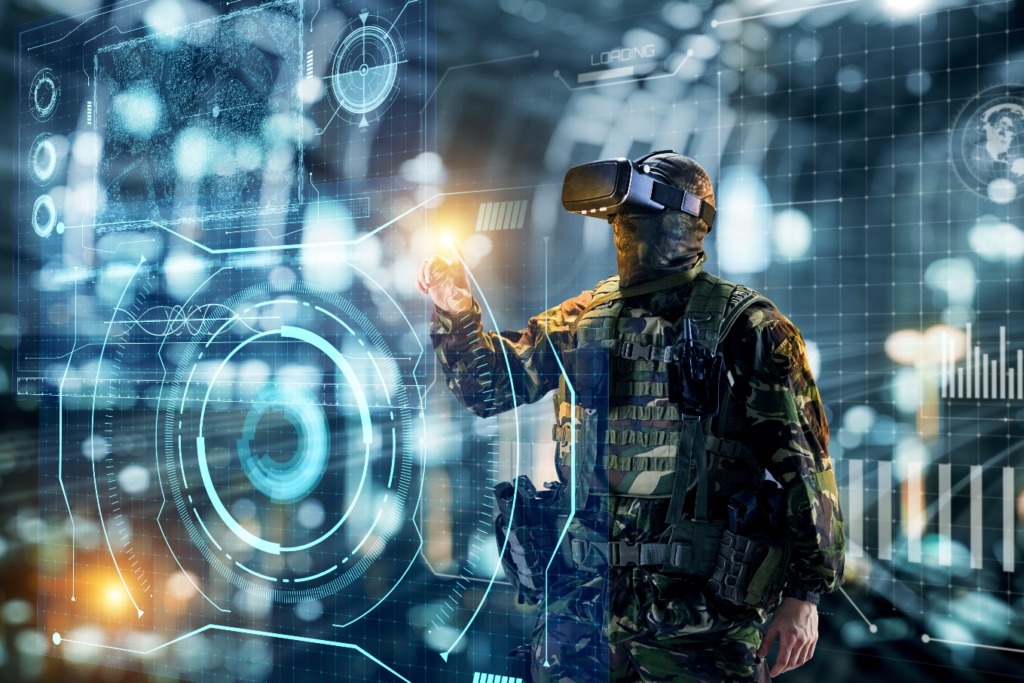
Nanotechnology plays a critical role in the “Army After Next” (AAN) program that is designed for the future of warfare and guides the modernization efforts of the military. It is implemented in various sectors of military particularly in defense, where it enhances the development of advanced capabilities and systems. With the ability to produce lightweight, compact, and high-strength materials and devices, nanotechnology offers transformative potential for military use. A thorough understanding and practical application of nanoelectronics, nanomaterials, and nanorobotics are fundamental to advancing military equipment and maintaining a technological edge in defense.
How does the implantation work?
Engagement: Nanotechnology can be used in the development of lightweight, high-strength combat systems, enhancing agility or allowing for increased firepower. The important innovations include nano-composites, nanotube-based armor fabrics, miniaturized electronic and photonic devices, and plastic wiring using nanotubes— all contributing to weight reduction in military technology.
Sustainment and protection: Nanotechnology enhances sustainment capabilities in the military by improving repair, maintenance, replacement, and disposal processes. It also strengthens protection through the development of lighter, stronger, and safer armor using flexible antiballistic textiles. Key applications include nanocoatings for adaptive camouflage, electromagnetic shielding to avoid detection, and nanoscale biosensors for early warning against biological threats and virus detection.
Mobility and decision making: Nanotechnology can significantly enhance the mobility and operational efficiency of land forces through nanosensors and nanoarmour, enabling improved movement, miniaturized devices, and better navigation. It also strengthens information-gathering capabilities with advanced detectors, undetectable surveillance sensors, novel displays, and improved data compression for efficient data management. Although this area is still underexplored, these advancements indirectly support faster and more informed decision-making. Additionally, nanotechnology enables rapid prototyping, a vital aspect of nanomanufacturing.

Communication: Nanotechnology offers significant potential to enhance communication capabilities through improved electronic components, higher memory chip density, reduced energy consumption, and smaller transistors in integrated circuits. However, despite intensive R&D efforts, the final outcomes may not always meet expectations. Key challenges include limitations in mobility, energy supply, and communication. Moreover, these emerging technologies raise important concerns related to international security, defense policy, arms control, and potential physiological or psychological impacts, along with heightened technological risks.
Applications
Nanotechnology supports wide-ranging advancements in military systems through miniaturization, enhanced functionality, and increased efficiency:
- Electronics & Photonics: Enables low-power, fast-processing micro/molecular electronics and efficient optical signal handling.
- Communication & AI: Enhances communication through high-frequency, secure, and autonomous systems using nanoscale memory and integrated computing.
- Materials Science: Leads to the development of smart, self-healing, lightweight, and biologically inspired materials with improved wear resistance.
- Energy: Enables efficient energy storage, long-duration use, solar integration, and supports AI-driven autonomous systems.
- Propulsion & Vehicles: Advances lightweight, efficient propulsion systems and UAVs/microdrones with higher heat resistance and lower friction.
- Weapons & Explosives: Produces lighter, stronger, and more efficient weapons, explosives, and propellants, including non-lethal and precision-guided technologies.
- Camouflage & Sensors: Introduces adaptive camouflage, nanophotonic materials, and distributed nanosensors for surveillance and threat detection.
- Protection & Armour: Develops ultra-lightweight active armor using amorphous materials and scalable production methods.
- Soldier & Implant Systems: Equips soldiers with integrated biosensors, drug-delivery systems, and thermal suits; also includes body-embedded monitoring/manipulation systems.
- Autonomous & Robotic Systems: Supports autonomous surveillance, logistics, search and rescue, demining, and biomimetic mini/micro-robots.
- Biotech Hybrids: Enables remote-controlled hybrid devices for reconnaissance or attack, potentially self-replicating in organisms.
- WMDs (Nuclear, Chemical, Biological): Facilitates miniaturized, sophisticated modeling and design of nuclear warheads, novel chemical and biological weapons with advanced delivery and interaction mechanisms.
- Protection Against CBR Threats: Improves biosensing, protective suits, neutralizing agents, and porous membranes for chemical/biological defense.
Reference
0 Comment