








Biotribology of Contact lenses
Introduction
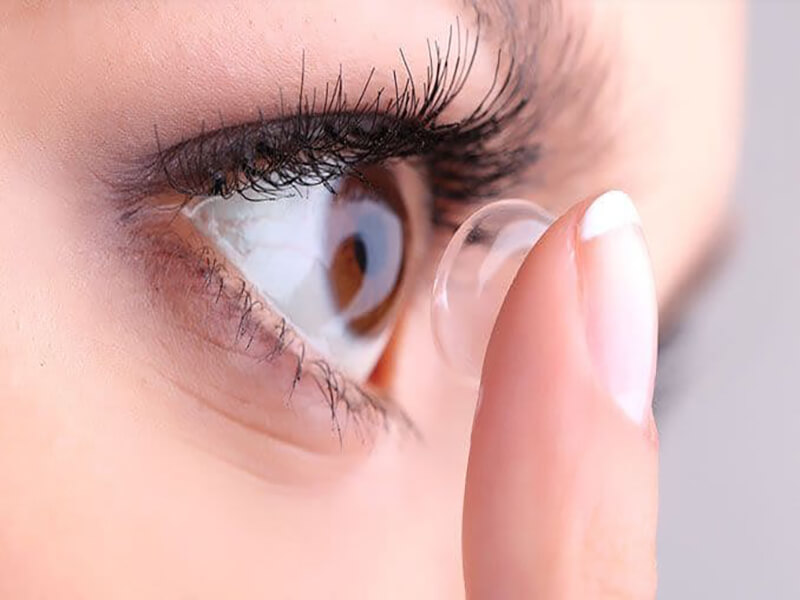
Ocular biotribology is a study of friction and lubrication in the eye, particularly in the use of contact lenses. Contact lenses are preferred over spectacles for their aesthetic appeal and ability to maintain peripheral vision however they often cause dryness and discomfort due to poor surface lubrication. This dryness increases friction between the lens and the eyelid during blinking, potentially leading to discomfort or infections. To address this, biotribological research emphasizes on reducing friction by improving lubrication and wettability in contact lens. Enhanced wettability helps to maintain a stable tear film on both sides of the lens, which is crucial for users comfort and eye health.
Lubrication mechanism
Natural lubrication via the tear film coats the eye and contact lens by acting as a lubricant. It helps minimize friction between the lens and eyelid during blinking and other eye movements. To ensure comfort and biocompatibility, contact lenses must work seamlessly with the tear film and ocular environment. Hence, modern lenses are made from materials like Senofilcon A, Narafilcon A, Delefilcon A, and Etafilcon A. They are soft and flexible, highly wettable to retain moisture, self-lubricating to reduce friction and antibacterial and biocompatible to prevent irritation and infection. Further they achieve ultra-low friction with an extremely low coefficient of friction (as low as 0.0001), greatly improving comfort during wear. By incorporating of wetting agents like polyvinylpyrrolidone and polyvinyl alcohol are added to reduce surface tension, improve wettability of the lens, maintain hydration, soothe dry eyes. Finally, research shows that silicone hydrogel lenses have lower friction compared to traditional hydrogel lenses. This results in less discomfort and better performance, especially during extended wear. These advancements reflect continuous progress in ocular biotribology, aiming to create more comfortable, effective, and safer contact lenses.

Figure-1 Interfacial movement of the contact lens on the eye surface [1]
Materials for lenses and their properties
In ocular biotribology, a wide range of materials, lubricants, and testing conditions have produced varied coefficient of friction values, ranging from 0.0001 to 0.64. However, most experimental sliding speeds are lower than those in real biological systems like the eye, where speeds reach around 100–200 mm/s under low pressure. Beyond friction, wettability and lubrication efficacy are key performance factors. Wettability is evaluated via contact angle measurements—values below 30° are ideal for soft contact lenses as they promote effective tear film spreading. Silicone hydrogel lenses such as Senofilcon A and Delefilcon A exhibit superior wettability with contact angles around 15–25°, compared to 40–50° for traditional hydrogel lenses. This improved wettability results in a more stable tear film, reducing friction, dryness, and discomfort. Since silicone is naturally hydrophobic, surface treatments and wetting agents are often used to enhance its compatibility with the tear film.
Conclusion
Advances in lens materials particularly silicone hydrogels like Senofilcon A and Delefilcon A have combined with wetting agents such as PVP and PVA, have significantly reduced friction and improved wettability. These innovations help maintain a stable tear film, reduce dryness, and enhance overall lens wear experience. Despite the progress, ocular biotribology remains an evolving field with substantial potential for future research and development of more effective, biocompatible, and clinically successful contact lenses that can further improve visual comfort and ocular health for users worldwide.
Reference

0 Comment