







Wear Prediction using Machine Learning
Introduction
In many industrial applications, wear is an inevitable and requires timely maintenance to minimize downtime of the production. Traditional wear prediction relies on experience and periodic inspections, but the complexity of wear makes accurate forecasting difficult. Machine learning (ML) offers a solution by using material properties and contact data to make precise predictions, optimizing wear management through artificial intelligence. ML uses data analytics and advanced algorithms to predict equipment wear with high accuracy. By analyzing historical usage data, environmental conditions, and maintenance records, ML forecasts wear patterns on critical machinery components. Additionally, artificial intelligence (AI)-driven wear models aid in material development and structural improvements, enhancing equipment durability and efficiency [1,2].
What is artificial neural network
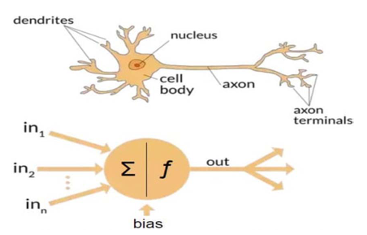
Artificial Neural Networks (ANNs) consist of several key components that enable learning and prediction. Neurons, or nodes, are the fundamental units that receive inputs, apply weighted sums with activation functions, and produce outputs. These neurons are connected through edges, with each connection assigned a weight that determines the strength and significance of the input. ANNs are structured in multiple layers, including input, hidden, and output layers, where data is processed and analyzed. Further, Weights play a crucial role in learning, as they are adjusted during training to capture patterns and improve accuracy. Activation functions, such as ReLU, sigmoid, and tanh, introduce nonlinearity, allowing ANNs to recognize complex patterns. Training involves feeding input data, comparing outputs to ground truth, and refining weights to minimize errors. Alongside this backpropagation is the primary training algorithm which propagates errors backward through the network to optimize weight adjustments. A loss function quantifies the error between predicted and actual values, using methods like mean squared error (MSE) or cross-entropy. Additionally, hyperparameters, including learning rate, batch size, and network structure, govern the training process and influence overall performance. Together, these components enable ANNs to learn, adapt, and improve predictive capabilities.

Figure-1 Basic structure of ANN
Model evaluation and performance analysis
Wear prediction models are evaluated using regression metrics like RMSE, MAE, and R², alongside clustering (Rand Index) and translation (BLEU) metrics. Validation techniques such as cross-validation and validation set approaches enhance model accuracy and generalization. The main steps in model evaluation and analysis are:
- Key Regression Metrics: Wear prediction models are evaluated using metrics like Root Mean Squared Error (RMSE), which penalizes larger errors, Mean Absolute Error (MAE), which is less sensitive to outliers, and the Coefficient of Determination (R²), which measures how well the model explains variability in the target variable.
- Rand Index: This metric assesses the similarity between two data clustering’s by comparing the proportion of agreements and disagreements in their grouping.
- BLEU Score: This is used for evaluating machine translation, the BLEU score ranges from 0 to 1, measuring similarity to reference translations and aligning with human judgment of translation quality.
- Cross-Validation: A resampling method that divides the dataset into subsets, repeatedly training and validating the model to improve stability and performance estimation.
- Validation Set Approach: The dataset is split into training and validation sets, where the training set helps the model learn, and the validation set assesses accuracy and fine-tunes hyperparameters for optimal performance.
Examples for some predictions
Wear Prevention & Process Optimization: ML is widely used to detect and prevent wear-related issues before they occur. By analyzing manufacturing processes, ML enables optimal productivity, improves product quality, and prevents unnecessary wear, leading to cost savings and increased efficiency. Many studies have focused on integrating ML with tribology to refine industrial processes and enhance durability.
Optimization via Neural Networks & Genetic Algorithms: Researchers have used ANNs in conjunction with genetic algorithms (GA) to optimize industrial processes like friction welding. For instance, an ANN model with nine neurons in a hidden layer was used to simulate the relationship between welding parameters (e.g., heating pressure, extrusion time) and output factors (e.g., tensile strength, metal loss). After optimization using GA, the process yielded higher-quality welds with predicted values closely matching actual results. Similar studies applied GA to backpropagation ANN models, further refining process parameters and improving forecasting accuracy without requiring excessive experimental data.
Void Formation Prediction in Friction Stir Welding: ML is also employed to optimize friction stir welding by predicting void formation, which negatively affects joint strength. Using 108 datasets from different aluminum alloys, researchers-built models based on decision trees and Bayesian neural networks. These models successfully predicted void formation with 96.6% accuracy, identifying temperature and maximum shear stress as the primary contributing factors. This approach allows manufacturers to adjust welding conditions proactively, improving weld integrity and mechanical properties.


Figure-2 A schematic representation of Du et al.’s void formation research, sourced underneath open access [3]
Limitations and Conclusion
Despite its potential, ML for wear prediction faces challenges such as the need for high-quality, standardized datasets, as model accuracy heavily depends on data quality, consistency, and completeness. Additionally, selecting the most suitable ML algorithm remains a complex task due to the lack of a universally superior method for optimization. Further ML has demonstrated significant promise in wear prediction, optimizing material selection, manufacturing processes, and equipment maintenance. By refining data collection standards, selecting appropriate algorithms, and improving model evaluation techniques, ML can greatly enhance predictive accuracy, leading to more efficient resource utilization and improved industrial productivity.
References
[2] Mahadeshwara, M.R., Kumar, S. and Dastidar, A.G., Artificial Intelligence in the Tribology.
0 Comment