







How Surface Wear Affects the Life of Industrial Cutting and Forming Equipment
Introduction
Surface wear is the gradual loss, deformation, or damage of material from a working surface when that surface rubs, slides, cuts, bends, or presses against another material. In industrial cutting and forming equipment, this small surface-level damage can quietly decide how long a machine stays accurate, productive, and profitable.
A cutting edge does not fail all at once. A bending die does not become inaccurate overnight. A punch, blade, guide, roll, insert, or clamping surface usually wears down through repeated contact, heat, friction, vibration, and pressure.
That is why surface wear is more than a maintenance issue. It affects part quality, machine load, tool life, scrap rate, inspection results, and production planning.
What is surface wear in industrial cutting and forming equipment?
Surface wear in industrial cutting and forming equipment is the progressive damage that occurs when tooling and machine contact surfaces experience repeated forces and movement. It appears on cutting edges, forming dies, press brake punches, blades, rollers, guides, clamps, bearings, and other working surfaces.

Over time, these forces change the surface’s shape and texture. A cutting edge may become rounded. A die face may become scored. A guide surface may become loose or polished in the wrong area.
Manufacturers often notice the result before they see the wear itself. Burrs grow larger, bend angles drift, holes lose accuracy, and machines require more force to do the same job.
What are the main types of surface wear?
Surface wear is not one single problem. It is a group of damage mechanisms that affect tools, dies, machine parts, and material contact surfaces in different ways.
There are 6 main types of surface wear found in industrial cutting and forming equipment:
- Abrasive wear removes material when hard particles or rough surfaces scrape against a softer surface.
- Adhesive wear transfers material between surfaces when pressure, heat, or poor lubrication causes sticking.
- Fatigue wear creates cracks, pitting, or flaking after repeated loading cycles.
- Corrosive wear combines chemical attack with mechanical contact.
- Fretting wear appears when tiny repeated movements damage a local contact area.
- Thermal wear happens when heat weakens, oxidizes, or softens the surface layer.
Which cutting and forming equipment is most affected by surface wear?
Industrial cutting and forming equipment is a group of machines that remove, shape, bend, punch, shear, or deform material into finished parts. Surface wear affects this equipment because the machines rely on controlled contact between tooling and workpiece material.
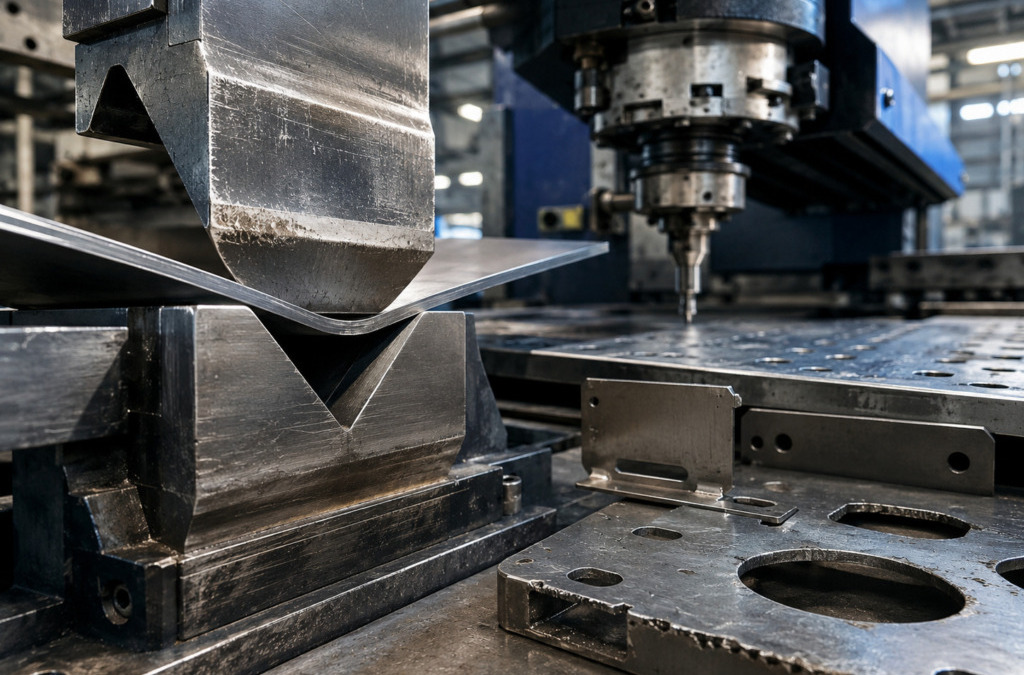
In metal fabrication, the contact is often intense. A press brake bends sheet metal with concentrated force. A punch press shears material through a die opening. A shearing machine depends on the condition of its blades. Roll forming equipment relies on smooth, repeated contact between rolls and material.
When manufacturers compare press brake machines, they often focus on tonnage, bending length, controls, and accuracy. Those factors matter, but tool condition and wear resistance also influence long-term performance.
How does surface wear shorten equipment life?
Surface wear shortens equipment life by increasing friction, heat, vibration, clearance, misalignment, and stress on connected components. A worn surface rarely stays isolated. Once the tool or contact point changes shape, the machine must work harder to keep producing the same result.
For example, a dull cutting edge needs more force to cut. That extra force can stress the machine frame, motor, bearings, guides, and drive system. In press brake bending, worn punch and die surfaces can increase forming load and reduce repeatability.
The same problem appears in automated systems. When friction rises, motion control becomes less smooth. Servo controls, servo controllers, and servo motor drives may need to compensate for inconsistent resistance, vibration, or load changes.
How does surface wear affect part quality?
Surface wear affects part quality by changing how the tool contacts the material. In manufacturing, the final part is often a direct reflection of the tool’s condition. A clean, sharp, stable tool creates cleaner parts. A worn, scratched, rounded, or misaligned tool creates variation.
In cutting, wear can produce burrs, rough edges, poor hole shape, and inconsistent dimensions. In bending, worn tooling can create angle variation, part marking, slipping, or uneven material flow. In forming, surface wear can cause scoring, galling, thinning, and poor repeatability.

Common quality problems include burrs, rough cut edges, scratches, surface marks, poor bend accuracy, dimensional variation, rejected parts, and higher scrap rates.
What causes premature surface wear?
Premature surface wear is wear that occurs earlier than expected because the process, material, setup, lubrication, or maintenance practices are not suitable for the job. Some wear is normal. Premature wear is different because it shortens tool life before the tooling has delivered its expected value.
Major causes include incorrect tooling material, poor lubrication, excessive cutting or forming force, wrong machine settings, abrasive materials, contamination, misalignment, and lack of inspection.
Tool choice also matters. A tool that works well on mild steel may fail faster on stainless steel, abrasive plate, or coated sheet. Poor alignment and skipped cleaning routines can also worsen surface wear.
How to reduce surface wear in cutting and forming equipment
Reducing surface wear involves choosing the right tooling, controlling friction, maintaining alignment, keeping the process clean, and replacing worn parts before they damage production quality. The goal is not to eliminate wear completely. The goal is to slow it, measure it, and prevent it from becoming a surprise.
There are 7 practical steps for reducing surface wear:
- Choose the right tooling material for the workpiece and production volume.
- Use surface coatings when extra hardness or lower friction is needed.
- Apply the correct lubricant or coolant for the process.
- Keep machine alignment within specification.
- Remove chips, scale, dust, and abrasive contamination.
- Track tool life with inspection records and production data.
- Replace or recondition tooling before quality problems spread.
Conclusion
Surface wear is not just a tooling problem. It is a production reliability problem that affects equipment life, part quality, maintenance cost, downtime, and customer satisfaction.
Every cutting and forming process creates some level of contact damage. The difference between a controlled operation and an expensive failure is how early the damage is noticed, measured, and corrected.

Manufacturers can reduce the impact of surface wear by selecting appropriate tooling, using suitable lubrication, maintaining machine alignment, cleaning contact areas, applying coatings when needed, and inspecting parts regularly.
A worn surface is often the first warning sign that the process is moving away from control. Treat it early, and the machine will usually run longer, produce better parts, and cost less to maintain.
0 Comment