








TriboNet Weekly: Global Tribology, Lubrication & Surface Engineering Intelligence — Oct. 12–19, 2026

Key Takeaways
- Electric-vehicle drivetrains are creating a distinct lubricant-design problem involving electrical behavior, thermal management, material compatibility and gear protection.
- Base-oil markets remained exposed to elevated feedstock costs, freight disruption and uncertainty surrounding the restoration of normal Pearl GTL production.
- Oleon added North American specialty-ester capacity, strengthening regional supply options for synthetic lubricants, hydraulic fluids and drilling-fluid components.
- Lubrication Engineers acquired BioBlend, bringing environmentally acceptable and bio-based lubricants further into the portfolio of a large industrial-lubricant supplier.
- FUCHS raised its 2026 earnings outlook after reporting preliminary nine-month EBIT growth of approximately 25%.
- New research addressed mixed-lubrication gear wear, additively manufactured tribomaterials, cold-rolling friction, cryogenic minimum-quantity lubrication and internally cooled cutting tools.
1. EV Gear Lubricants Move Toward a New Performance Framework
The Society of Tribologists and Lubrication Engineers released a special report examining the changing requirements for lubricants used in electric-vehicle gear systems.
An EV drivetrain fluid must protect gears and bearings while operating near electric motors, windings, insulation systems, copper conductors and power electronics. Its design therefore extends beyond conventional extreme-pressure and antiwear performance.

Important requirements include:
- Gear and bearing wear protection
- Resistance to oxidation at elevated operating temperatures
- Copper and electrical-material compatibility
- Controlled electrical conductivity
- Efficient heat removal
- Foam and aeration control
- Compatibility with polymers, elastomers and insulating materials
- Low churning and traction losses
- Protection against electrical-discharge-related surface damage
A major formulation challenge is that these properties can conflict. Increasing conductivity may help dissipate charge but can also raise electrical leakage or corrosion concerns. Reducing viscosity can improve drivetrain efficiency, but thinner films increase the probability of mixed and boundary lubrication.
Why Tribologists Should Care
EV lubrication is becoming a coupled electrical–thermal–mechanical problem. Standard gear tests alone may not reproduce the combined influence of voltage, temperature, speed, torque and electrically active interfaces.

Future qualification programs will increasingly require:
- Electrified bearing and gear tests
- Copper-corrosion and insulation-compatibility testing
- Thermal-aging studies
- Electrical conductivity monitoring during lubricant degradation
- Efficiency measurements under representative drive cycles
Source: STLE Releases Report on Next-Generation EV Gear Lubricants jobbersworld.com

2. Base-Oil Supply Remains Exposed Despite Pearl GTL Progress

During the reporting period, lubricant-market coverage continued to assess Shell’s partial restart of the Pearl gas-to-liquids facility in Qatar.
The partial restart allowed limited product inventory to be rebuilt, but it did not establish that normal lubricant base-oil production or exports had resumed. Repairs to the damaged second train were reported as continuing, while shipments remained exposed to regional security and transport constraints. reuters.com
The distinction between a general plant restart and a normal base-oil supply recovery is important. A GTL complex produces several product streams, and renewed output of naphtha or other products does not necessarily indicate that high-quality lubricant base stocks are available at historical volumes.
At the same time, market reporting pointed to:

- Elevated crude-oil and feedstock values
- High diesel refining margins
- Increased freight and marine-insurance costs
- Competition for refinery feedstocks
- Continued Group III and premium base-stock uncertainty
- Greater working-capital requirements for blenders and distributors
The Asian lubricant market also showed strong demand. Base Oil News reported that Asia’s August lubricant demand had reached a record while supply increased, illustrating that tightness was not caused simply by weak production but by the interaction of demand, logistics and regional product availability. baseoilnews.com
Tribology Impact
Supply disruption can force formulators to qualify alternative base stocks. Even when substitutes have matching viscosity grades, differences in volatility, solvency, oxidation stability and additive response can change:
- Tribofilm formation
- Deposit control
- Seal compatibility
- Air release and foam behavior
- Low-temperature performance
- Friction-modifier effectiveness
- Elastohydrodynamic film thickness
Base-oil substitution should therefore be treated as a formulation change—not merely a purchasing decision.
Sources:
- Shell Partially Restarts Pearl GTL, but Base-Oil Recovery Timeline Remains Unclear
- Reuters: Shell Partially Restarts Pearl GTL Plant
- Base Oil News
3. Oleon Adds U.S. Specialty-Ester Production
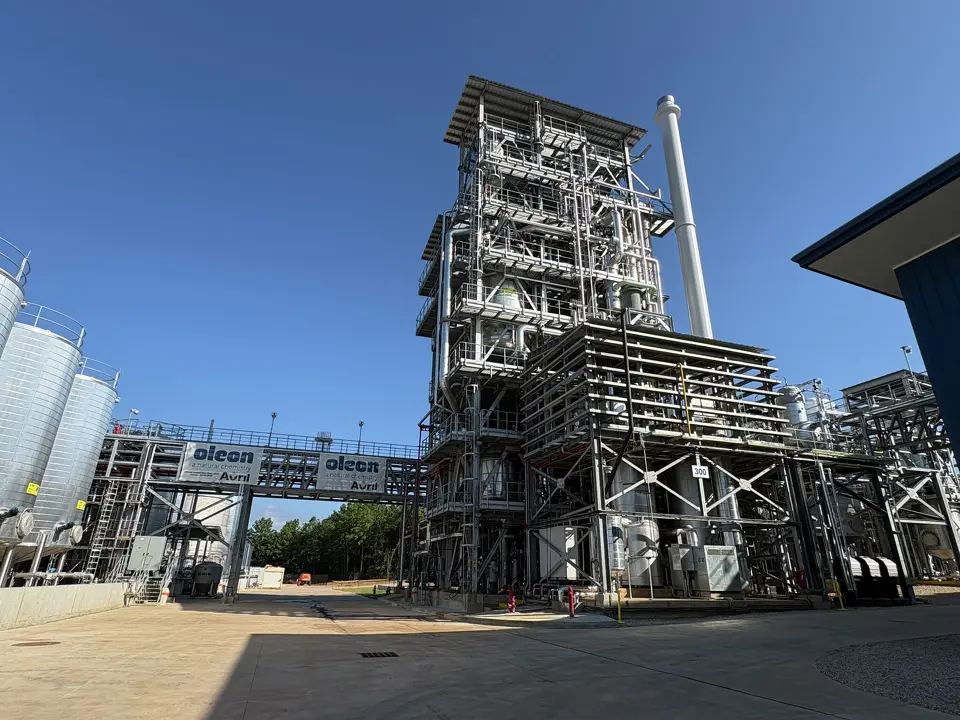
Oleon inaugurated a new esterification unit at its Conroe, Texas, facility. The unit entered full operation in September and was formally announced on 16 October.
It expands U.S. production of specialty esters used in:
- Synthetic lubricants
- Hydraulic fluids
- Drilling fluids
- Metalworking formulations
- Personal-care products
- Other specialty industrial applications
The facility converts natural feedstocks, including vegetable oils and animal fats, into higher-value ester products. Local production should reduce dependence on imported material and shorten supply chains for customers in North America. jobbersworld.com
Why Tribologists Should Care
Synthetic esters can offer:
- High lubricity
- Strong surface affinity
- Good viscosity-temperature behavior
- Low volatility
- High flash points
- Potential biodegradability
- Useful solvency for additives and deposits
Their polar character can improve boundary-film formation, but it may also create additive competition at metal surfaces. Hydrolytic stability, seal compatibility and oxidative life must be evaluated for each ester chemistry.
The expansion is particularly relevant to environmentally sensitive hydraulic, marine, mining and drilling applications, where leakage risk can support demand for biodegradable or renewable formulations.
Sources:
- Oleon Begins Specialty Ester Production at Texas Facility
- Oleon Opens Its First U.S. Esterification Unit
4. Lubrication Engineers Acquires BioBlend
Lubrication Engineers announced its acquisition of BioBlend Renewable Resources on 19 October. Financial terms were not disclosed.
BioBlend develops bio-based, hybrid and biodegradable lubricants for demanding applications including:
- Underground mining
- Marine equipment
- Dredging
- Drilling
- Food-grade machinery
- Fire-resistant hydraulic systems
- General industrial equipment
The acquisition gives Lubrication Engineers access to an established renewable-lubricant portfolio and application expertise in environmentally sensitive operations. BioBlend gains access to LE’s manufacturing, distribution and international customer network. jobbersworld.com
Tribology Impact
Bio-based lubricants must meet the same operational requirements as mineral and synthetic alternatives. Relevant technical risks include oxidation, hydrolysis, cold flow, microbial stability and compatibility with seals or existing lubricant residues.
The transaction indicates that sustainable lubrication is moving from a specialist segment toward mainstream industrial reliability portfolios.
For end users, purchasing decisions should be based on:
- OEM approval
- Biodegradability test method
- Aquatic-toxicity classification
- Oxidation stability
- Wear and scuffing performance
- Water separation
- Seal compatibility
- Drain interval and total lifecycle cost
Source: Lubrication Engineers Acquires BioBlend Renewable Resources

5. FUCHS Raises Its 2026 Earnings Forecast
FUCHS reported preliminary revenue of €3.126 billion for the first nine months of 2026, compared with €2.700 billion in the corresponding 2025 period.
Preliminary EBIT increased from €326 million to €409 million—approximately 25%. The company consequently raised its full-year 2026 EBIT forecast to around €500 million. fuchs.com
The results indicate that a major independent lubricant producer was able to expand both sales and operating earnings despite:
- Base-stock disruption
- Elevated feedstock costs
- Freight uncertainty
- Regional supply-chain pressure
- Automotive-market transition
- Growing formulation complexity
Why Tribologists Should Care
Strong supplier profitability can support increased investment in:
- EV fluids
- Specialty synthetic lubricants
- Biodegradable formulations
- Digital condition monitoring
- Application engineering
- Regional production and supply resilience
However, headline revenue growth should not automatically be interpreted as volume growth. Price adjustments, acquisitions, product mix and currency movements can materially affect reported sales.
Primary source: FUCHS: Preliminary Nine-Month 2026 Results and Raised Forecast
6. Lubri-Loy Changes Ownership and Plans Automotive Expansion
Costa Kapothanasis acquired Lubri-Loy, an established St. Louis lubricant producer, through a private holding company.
Lubri-Loy said it would retain its name, headquarters, industrial product portfolio, part numbers and distributor relationships. The new owner also plans to reintroduce automotive lubricant products, initially using a network of more than 60 quick-lube locations as a route to market. jobbersworld.com
The company’s existing portfolio includes:
- Industrial oils
- Greases
- Food-grade lubricants
- Maintenance chemicals
- Specialty lubrication products
Market Significance
The acquisition combines an industrial lubricant manufacturer with a downstream automotive-service network. It may provide rapid field feedback on oil consumption, service intervals and customer response.
The technical question will be whether automotive expansion produces proprietary formulations, private-label products or products blended to established third-party specifications.
Source: Costa Kapothanasis Acquires Lubri-Loy
7. Research Watch: Diversified Papers Published During the Week
7.1 Mixed-Lubrication Gear Wear Modelling
Paper: Gear wear quantification model under mixed elastohydrodynamic lubrication (EHL) and influencing-factor analysis
Published: 14 October 2026
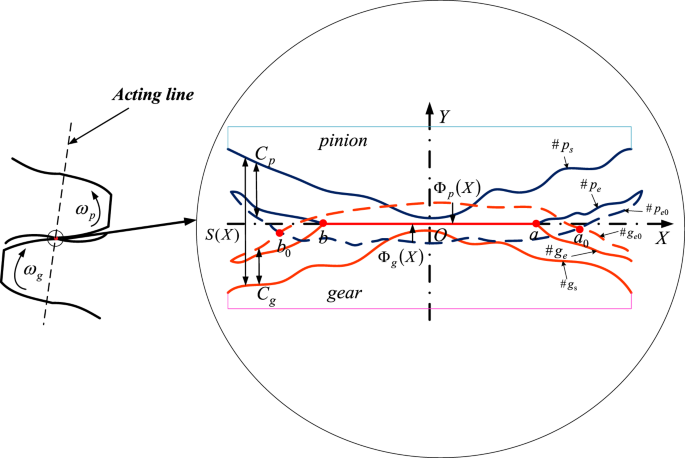
The researchers combined an improved Archard wear model with non-Hertzian contact-pressure calculations and a refined sliding-distance formulation. They also incorporated oil-film and asperity-contact stiffness into a time-varying gear-mesh model.
The model predicts greater wear near the tooth-root region and minimum wear close to the pitch point. It evaluates the effects of speed, torque, roughness and contact temperature on wear evolution. Springer Nature
Why it matters: It links lubrication regime, wear accumulation and transmission dynamics, offering a route toward wear-aware gearbox digital twins.
Paper: Springer article and DOI
7.2 Annealing and Graphene-Reinforced 3D-Printed PLA
Paper: Effect of Annealing on the Room-Temperature Dry Sliding Tribological Behavior of Additively Manufactured Neat and Graphene-Reinforced PLA
Published: 13 October 2026
Journal: Tribology Letters
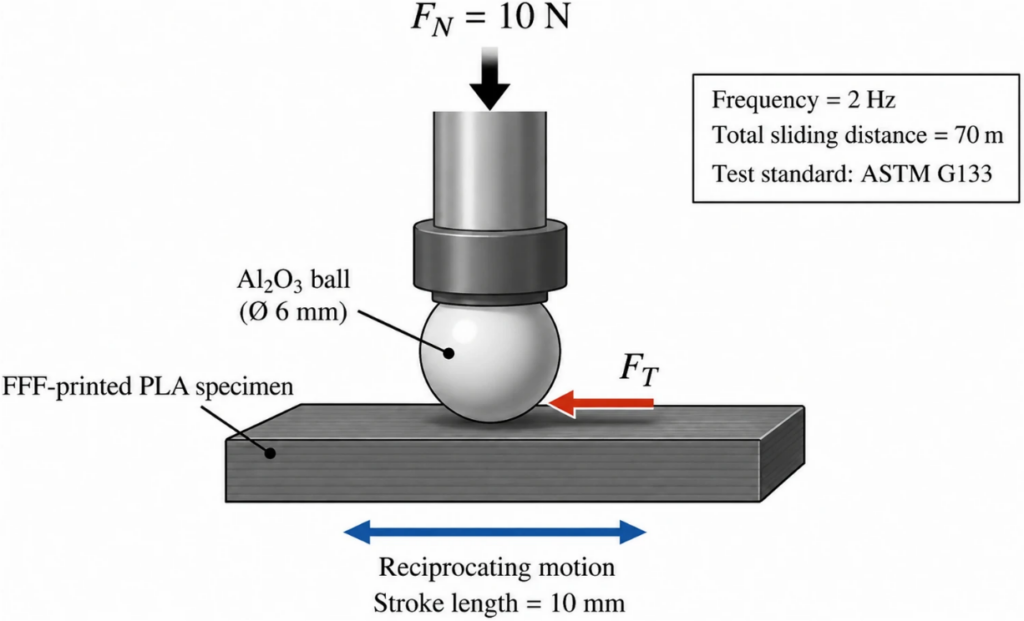
The study examined how annealing changes the dry-sliding behavior of fused-filament-fabricated neat PLA and graphene-reinforced PLA. The analysis included surface topography, friction, wear rate, debris and transfer-film behavior. Springer Nature Link
Why it matters: Additive-manufactured polymers are increasingly considered for guides, low-load gears, fixtures and sliding components. Their tribological performance depends on processing history, crystallinity, build structure and transfer-film formation—not only filler content.
Paper: https://doi.org/10.1007/s11249-026-02214-0
Supporting dataset: Mendeley Data
7.3 Cryogenic Minimum-Quantity Lubrication
Paper: Cryogenic minimum quantity lubrication for improving the surface integrity of AISI 347
Published: 17 October 2026
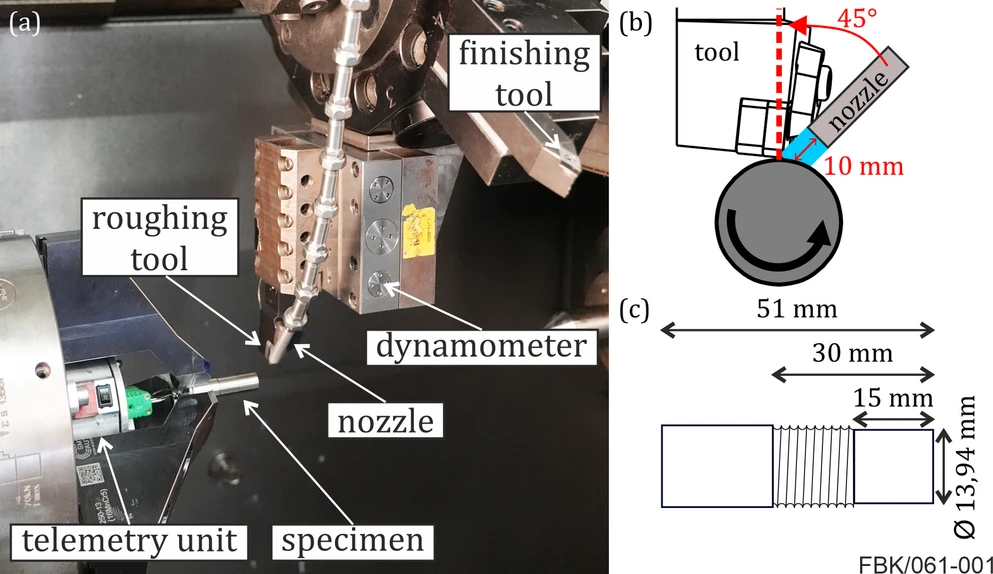
This open-access study evaluates cryogenic minimum-quantity lubrication as a machining strategy for austenitic stainless steel. The approach combines highly localized lubricant delivery with cryogenic cooling to reduce heat generation and improve machined-surface integrity. link.springer.com
Why it matters: Cryogenic MQL attempts to retain the friction-reduction benefits of lubrication while reducing the large fluid volumes associated with flood cooling. Its industrial value depends on tool life, residual stress, surface damage and overall process energy.
Paper: Springer article
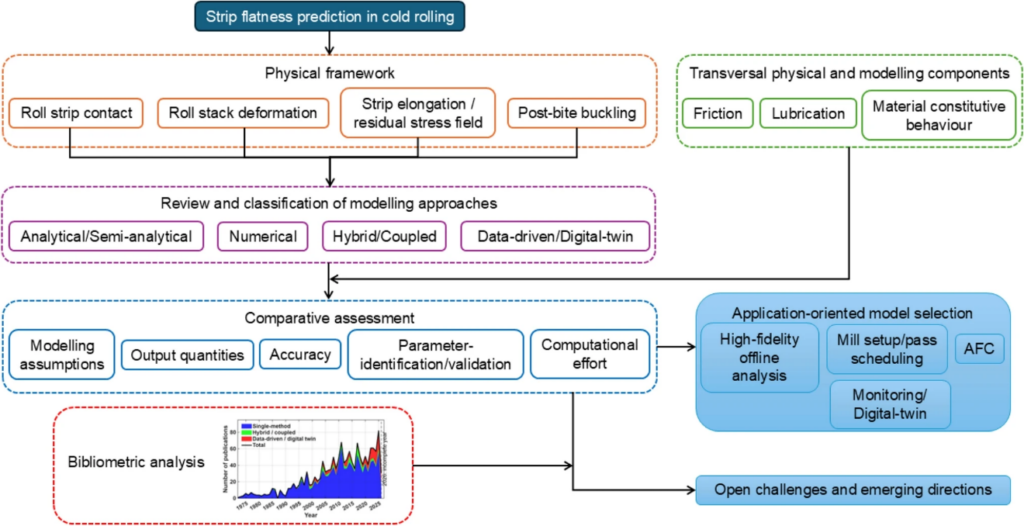
7.4 Friction and Lubrication in Cold-Rolling Flatness Models
Paper: Strip flatness prediction in cold rolling: a review of models, challenges, and emerging directions
Published: 15 October 2026
The review examines how strip flatness is affected by coupled roll-bite mechanics, friction, lubrication, roll-stack deformation, material response and post-bite buckling.
It identifies the need for models that connect local lubrication and friction conditions with stress distribution and downstream strip shape. link.springer.com
Why it matters: Lubricant behavior in the roll bite affects more than friction and energy consumption. It can influence dimensional accuracy, surface finish, residual stress and the development of edge waves or center buckle.
Paper: https://doi.org/10.1007/s00170-026-19263-3
7.5 Internal Microchannel Cooling for Cutting-Tool Wear Reduction
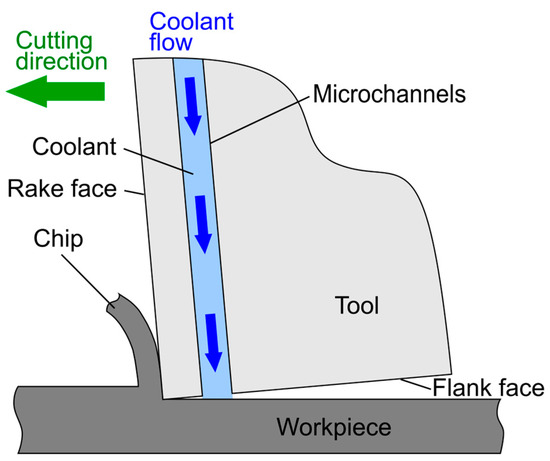
Paper: Proposal of Internal Cooling Method by Cutting-Edge-Adjacent Plural Microchannels (CPM) for Reduction of Tool Wear
Published: 13 October 2026
The researchers propose multiple internal microchannels positioned close to the cutting edge. This reduces the distance between the hottest tool region and the cooling zone, addressing a limitation of conventional internal-cooling designs. mdpi.com
Why it matters: Cutting-tool wear is governed by a combination of temperature, interfacial friction, adhesion, abrasion and diffusion. Bringing cooling closer to the active interface could suppress thermal softening and slow temperature-driven wear mechanisms.
Paper: https://www.mdpi.com/2504-4494/10/10/426
8. Technology Outlook
| Technology area | Development | Tribology opportunity | Principal risk |
| EV drivetrain fluids | Dedicated performance frameworks | Integrated electrical, thermal and wear testing | Conflicting conductivity and insulation requirements |
| Mixed-EHL gear models | Wear linked to film and asperity stiffness | Predictive maintenance and digital twins | Dependence on accurate roughness and lubricant inputs |
| Bio-based lubricants | Supplier consolidation and portfolio expansion | Renewable fluids for sensitive environments | Oxidation, hydrolysis and compatibility |
| Specialty esters | New U.S. production capacity | Better lubricity and biodegradable-fluid development | Additive competition and seal response |
| Cryogenic MQL | Combined cooling and microscale lubrication | Reduced fluid use and better surface integrity | Process complexity and energy balance |
| Additive-manufactured tribomaterials | Thermal treatment plus functional fillers | Lightweight custom sliding components | Anisotropy and inconsistent transfer films |
| Internally cooled cutting tools | Microchannels closer to the cutting edge | Lower thermal wear and longer tool life | Tool strength and manufacturability |
9. Industry and Professional Developments
The Independent Lubricant Manufacturers Association presented its John A. Bellanti Award to Julie Thomas and Luc Girard during the ILMA Annual Meeting in Phoenix on 19 October. The awards recognized long-term service to independent lubricant manufacturing. jobbersworld.com
Industry attention was also turning toward forthcoming technical events, including TriboNet’s online session on artificial intelligence in tribology and the November TRiboSurf’26 conference in Türkiye. TriboNet
10. Final Outlook
The 12–19 October period shows three connected transitions.
First, lubricant performance is becoming more application-specific. EV gear fluids, environmentally acceptable lubricants and low-volume machining fluids cannot be evaluated solely through conventional viscosity and wear tests.
Second, supply security is becoming a technical concern. GTL interruptions, freight costs and ester availability can force formulation changes that affect friction, deposits, seals and component life.
Third, tribology research is becoming more predictive and integrated. Gear-wear models now combine film formation, asperity contact and dynamics, while manufacturing research increasingly links cooling architecture, lubricant delivery and surface integrity.
For tribologists, the practical priority is to connect laboratory tests with complete operating systems: lubricant chemistry, electrical environment, surface condition, temperature, material compatibility and supply-chain variability.
References
- Society of Tribologists and Lubrication Engineers (STLE). “STLE Releases Report on Next-Generation EV Gear Lubricants,” 13 October 2026.
https://jobbersworld.com/2026/10/13/stle-releases-report-on-next-generation-ev-gear-lubricants/ - Reuters. “Shell Partially Restarts Pearl Gas-to-Liquids Plant in Qatar,” 8 October 2026.
https://www.reuters.com/business/energy/shell-partially-restarts-pearl-gas-to-liquids-plant-qatar-2026-10-08/ - JobbersWorld. “Shell Partially Restarts Pearl GTL, but Base-Oil Recovery Timeline Remains Unclear,” 13 October 2026.
https://jobbersworld.com/2026/10/13/shell-partially-restarts-pearl-gtl-but-base-oil-recovery-timeline-remains-unclear/ - Argus Media. “Base Oils and Lubricants: Weekly Global Market Review,” 16 October 2026.
https://www.baseoilnews.com/ - JobbersWorld. “High Diesel Margins and Rising Freight Costs Compound Lubricant Industry Challenges,” 19 October 2026.
https://jobbersworld.com/2026/10/19/high-diesel-margins-and-rising-freight-costs-compound-lubricant-industry-challenges/ - JobbersWorld. “Oleon Begins Specialty Ester Production at Texas Facility,” 19 October 2026.
https://jobbersworld.com/2026/10/19/oleon-begins-specialty-ester-production-at-texas-facility/ - Houston Chronicle. “Oleon Opens Its First U.S. Esterification Unit in Conroe,” 19 October 2026.
https://www.houstonchronicle.com/news/houston-texas/trending/article/oleon-conroe-esterification-plant-22479913.php - JobbersWorld. “Lubrication Engineers Acquires BioBlend Renewable Resources,” 19 October 2026.
https://jobbersworld.com/2026/10/19/lubrication-engineers-acquires-bioblend-renewable-resources/ - FUCHS SE. “Preliminary Results for the First Nine Months of 2026 Exceed Expectations and EBIT Forecast for 2026 Raised,” 19 October 2026.
https://www.fuchs.com/group/press/press-releases/ad-hoc-releases/news-detail/view/10393-FUCHS-SE-Preliminary-results-for-the-first-9-months-of-2026-exceed-expectations-and-EBIT-forecast-for-2026-raised/ - JobbersWorld. “FUCHS Raises 2026 Earnings Forecast as Nine-Month EBIT Climbs 25%,” 19 October 2026.
https://jobbersworld.com/2026/10/19/fuchs-raises-2026-earnings-forecast-as-nine-month-ebit-climbs-25/ - JobbersWorld. “Costa Kapothanasis Acquires Lubri-Loy, Plans Automotive Expansion,” 13 October 2026.
https://jobbersworld.com/2026/10/13/costa-kapothanasis-acquires-lubri-loy-plans-automotive-expansion/ - Gear Wear Quantification Model Under Mixed Elastohydrodynamic Lubrication (EHL) and Influencing-Factor Analysis. Journal of the Brazilian Society of Mechanical Sciences and Engineering, 2026. DOI: 10.1007/s40430-026-06813-9.
https://doi.org/10.1007/s40430-026-06813-9 - Herrmann, S., do Nascimento, C.E.F., dos Santos, B.K., et al. “Effect of Annealing on the Room-Temperature Dry Sliding Tribological Behavior of Additively Manufactured Neat and Graphene-Reinforced PLA.” Tribology Letters, 74, 120 (2026). DOI: 10.1007/s11249-026-02214-0.
https://doi.org/10.1007/s11249-026-02214-0 - Herrmann, S., et al. “Effect of Annealing on the Tribological Behavior of 3D-Printed Carbon PLA”—Supporting Dataset. Mendeley Data, 2026. DOI: 10.17632/wppkzc37hr.1.
https://doi.org/10.17632/wppkzc37hr.1 - Kirsch, B., et al. “Cryogenic Minimum Quantity Lubrication for Improving the Surface Integrity of AISI 347.” The International Journal of Advanced Manufacturing Technology, 2026. DOI: 10.1007/s00170-026-19341-6.
https://doi.org/10.1007/s00170-026-19341-6 - Previati, G., et al. “Strip Flatness Prediction in Cold Rolling: A Review of Models, Challenges, and Emerging Directions.” The International Journal of Advanced Manufacturing Technology, 2026. DOI: 10.1007/s00170-026-19263-3.
https://doi.org/10.1007/s00170-026-19263-3 - “Proposal of Internal Cooling Method by Cutting-Edge-Adjacent Plural Microchannels (CPM) for Reduction of Tool Wear.” Journal of Manufacturing and Materials Processing, 10(10), 426 (2026).
https://www.mdpi.com/2504-4494/10/10/426 - JobbersWorld. “ILMA Honors Julie Thomas and Luc Girard with John A. Bellanti Awards,” 19 October 2026.
https://jobbersworld.com/2026/10/19/ilma-honors-julie-thomas-and-luc-girard-with-john-a-bellanti-awards/ - TriboNet. “Tribology Events Calendar.”
https://www.tribonet.org/event/
0 Comment