







TriboNet Weekly: Global Tribology, Lubrication & Surface Engineering Intelligence | Sep 7–12, 2026

Week: 7–12 September 2026
Weekly Key Takeaways
- Crude-oil risk intensified again. Brent approached US$100/bbl on 9 September as attacks involving Middle Eastern energy and shipping infrastructure increased concerns about regional supply disruption.
- Base-oil availability remained under pressure. Industry reporting indicated that global base-oil supply had fallen to a 16-month low, while the available surplus also contracted.
- Lubricant-sector consolidation continued in Latin America. Valvoline Global Operations agreed to acquire Chilean lubricant, grease and maintenance-product supplier Luval S.A.
- Circular lubrication moved into commercial-vehicle operations. PETRONAS Lubricants India and Tata Motors began a pilot programme for collecting and recycling used lubricating oil.
- Bearing monitoring moved closer to the contact. SKF and Sentea announced a fibre-optic platform designed to extract information on loads, temperature, vibration, lubrication conditions and contact pressures directly from instrumented bearings.
- Wear prediction increasingly depends on signal interpretation. New research showed that friction mapping, wavelet analysis and surface-topography information can help identify the transition from lubricated sliding to abrasive wear.
- Tribology expanded into infrastructure materials. September’s STLE technical feature highlighted how asphalt performance involves adhesion, friction, deformation, binder chemistry and interfacial behaviour—not rheology alone.
- The tribology conference season accelerated. The Polish Tribology Conference and TriboNet’s “Tribology in Industry” webinar took place during the week, while the 8th World Tribology Congress approached.
1. Global Oil Market
Market Snapshot

| Factor | Weekly status | Tribology/lubricant impact |
| Brent crude | US$99.22/bbl during trading on 9 Sep | ↑ Base-oil and synthetic-feedstock cost risk |
| WTI crude | US$94.13/bbl during trading on 9 Sep | ↑ North American lubricant-production costs |
| Middle East supply | Renewed attacks and shipping disruption | ↑ Availability and logistics risk |
| Strait of Hormuz | Continued geopolitical sensitivity | ↑ Marine freight and insurance exposure |
| Asian importers | Greater inflation and supply concerns | ↑ Finished-lubricant price pressure |
Brent crude moved close to US$100/bbl on 9 September, its highest region since July, as escalating attacks across the Middle East renewed concerns about oil production and transportation. Brent was reported at approximately US$99.22/bbl, while WTI reached approximately US$94.13/bbl.
The increase was not simply a reaction to headline risk. Markets were increasingly considering the possibility of sustained disruption involving:
- regional production facilities;
- oil tankers;
- export terminals;
- Saudi supply routes;
- the Strait of Hormuz.
Brent had risen by approximately one-quarter since early August, demonstrating how rapidly geopolitical disruption had reintroduced an energy-risk premium.
Why Tribologists Should Care

Crude price movements affect the lubricant sector through several connected pathways:
crude supply → refinery economics → base-oil availability → additive and blending costs → finished-lubricant prices
The pressure is especially important for products requiring:
- Group II and Group III base oils;
- PAO and ester-based synthetic fluids;
- low-viscosity automotive formulations;
- turbine and compressor lubricants;
- high-temperature industrial oils;
- extended-drain heavy-duty engine oils.
Daily crude prices do not translate directly into lubricant prices. However, sustained crude and logistics disruption can significantly affect refinery planning, feedstock availability and replacement costs.


Further reading: Reuters — Oil nears US$100 as Middle East supply risks intensify
2. Global Base-Oil Supply Falls to a 16-Month Low
Base-oil-market reporting during the week indicated that global supply had fallen to its lowest level in approximately 16 months. The estimated supply surplus also contracted, reducing the buffer available to absorb production outages or sudden changes in regional demand.

At the same time, China’s August base-oil production remained broadly steady, although Group II output declined. This matters because Group II and Group III oils support a large proportion of modern automotive and industrial formulations.
Market Implication
A smaller supply surplus makes the lubricant market more sensitive to:
- refinery maintenance;
- unplanned shutdowns;
- regional sanctions;
- shipping interruptions;
- changes in automotive demand;
- competition between fuel and base-oil production.
Group III availability remains particularly important for low-viscosity passenger-car motor oils, premium heavy-duty lubricants and several electrified-drivetrain formulations.
Tribology Impact
Reduced availability can force formulators to reconsider:
- base-stock interchange;
- viscosity-index requirements;
- additive compatibility;
- oxidation stability;
- volatility;
- seal compatibility;
- validation testing.
A base-oil substitution is therefore not merely a purchasing decision. It can alter film thickness, friction-modifier response, additive solubility and deposit behaviour.

Further reading: Base Oil News — Global base-oil supply falls to a 16-month low and global base-oil supply surplus shrinks
3. Heavy-Duty Engine Oils Reflect the New Lubricant Price Environment
Commercial lubricant prices continued to move sharply higher during 2026, with heavy-duty engine oil—HDEO—emerging as one of the clearest indicators of the market reset.
HDEO formulations must balance demanding requirements involving:
- soot control;
- oxidation resistance;
- piston cleanliness;
- wear protection;
- viscosity retention;
- after-treatment compatibility;
- extended drain intervals.
These requirements limit the extent to which formulators can replace constrained components without additional validation.
Engineering Interpretation
The commercial lubricant market is increasingly shaped by two simultaneous pressures:
higher raw-material costs + stricter performance requirements
This means that lower-cost reformulation may introduce technical trade-offs. Changes to the base-oil or additive system can influence antiwear-film formation, dispersancy, viscosity stability and bearing protection.
Further reading: JobbersWorld — The new commercial-lubricant price reality
4. PETRONAS Lubricants India and Tata Motors Pilot Used-Oil Recycling
PETRONAS Lubricants India and Tata Motors announced a pilot programme focused on collecting and recycling used lubricating oil.
The initiative reflects a broader transition from the conventional linear model:
produce → use → discard
towards:
produce → use → collect → re-refine → return to the lubricant value chain
Why This Matters
Used oil may contain:
- oxidation products;
- depleted additives;
- water;
- fuel dilution;
- soot;
- metallic wear particles;
- external dust and process contamination.
Re-refining must remove these contaminants while recovering base-oil molecules suitable for subsequent formulation.
Tribology Significance
Circularity cannot be assessed only by the quantity of used oil collected. Re-refined base oils must also demonstrate suitable:
- viscosity and viscosity index;
- volatility;
- oxidation stability;
- additive response;
- deposit control;
- wear protection;
- seal compatibility.
The pilot is particularly relevant to commercial vehicles because fleet operations can provide concentrated and traceable used-oil streams, making organised collection more practical.
Further reading: Base Oil News — PETRONAS Lubricants India and Tata Motors pilot used-oil recycling
5. Valvoline Global Operations Expands in Chile
Valvoline Global Operations entered into an agreement to acquire Luval S.A., a Chilean manufacturer and distributor of lubricants, greases and maintenance products.
The transaction continues a wider trend of consolidation across lubricant manufacturing and distribution. Companies increasingly seek local blending, distribution and technical-service capabilities rather than relying only on product exports.
Strategic Direction
The modern lubricant supplier is moving from:
product manufacturer
towards:
formulator + distributor + technical-service provider + reliability partner
Local operations can support faster product availability, customer-specific formulations and closer collaboration with industrial maintenance teams.
Regional Importance
Chile contains demanding applications in mining, transport, power generation and heavy industry. These sectors require lubricants capable of operating under combinations of:
- high loads;
- dust contamination;
- vibration;
- variable temperature;
- long service intervals;
- difficult maintenance access.
Further reading: Valvoline Global Operations to acquire Luval S.A.
6. Lubricant-Additive Access Expands in Mexico
Univar Solutions México and LANXESS announced a distribution agreement intended to broaden Mexican customers’ access to specialty additives for lubricants and metalworking fluids.
Additive distribution is becoming strategically important because modern formulations often rely on carefully balanced combinations of:
- antiwear agents;
- extreme-pressure additives;
- antioxidants;
- corrosion inhibitors;
- friction modifiers;
- detergents and dispersants;
- viscosity modifiers;
- foam-control agents.
Formulation Challenge
Additives cannot always be replaced independently. Their surface adsorption and chemical reactions may be synergistic or antagonistic.
For example:
friction modifier + ZDDP + detergent chemistry → final tribofilm structure and friction response
Consequently, wider access to specialty additives can improve formulation flexibility, but every meaningful chemistry change still requires laboratory and application-specific validation.
Further reading: JobbersWorld — Univar Solutions and LANXESS expand lubricant-additive access in Mexico
7. SKF and Sentea Bring Fibre-Optic Sensing Inside Bearings
SKF announced a collaboration with fibre-optic sensing specialist Sentea for the development and production of SKF Core, an integrated hardware platform supporting the next generation of SKF Insight bearings.
The system combines sensing, signal processing and communication within a single industrial unit. Instrumented bearings can provide information on:
- load;
- speed;
- temperature;
- vibration;
- lubrication conditions;
- contact pressure;
- bearing health.
Why This Is Different
Conventional monitoring usually measures machine behaviour from an external location. Such measurements can be affected by the transmission path between the bearing and the sensor.
SKF’s approach moves sensing closer to the active contact:
bearing contact → embedded sensing → signal processing → condition assessment
This could improve the detection of lubrication loss, abnormal load distribution, thermal instability and developing bearing damage.
Predictive-Maintenance Impact
The platform supports a shift from:
scheduled maintenance → condition-based maintenance → predictive control
SKF indicated that the system would be demonstrated at AMB 2026 in Stuttgart using live bearing-condition data.
Further reading: SKF — Advances in Insight bearing technology through collaboration with Sentea
8. Research Spotlight: Predicting the Transition to Abrasive Wear
A study from researchers at the Karlsruhe Institute of Technology examined how a lubricated bearing-steel contact transitions into abrasive wear.
The researchers first operated a pin-on-disc contact with base oil for 2,000 seconds to establish stable lubricated sliding. An abrasive slurry was then introduced without stopping the test, allowing the onset of abrasive wear to be examined continuously.
Three complementary predictive indicators were identified.
| Approach | Observation | Potential application |
| Spatial friction mapping | Lubricated and abrasive conditions showed related spatial patterns | Identify wear-prone regions |
| Wavelet analysis | Frequency-domain responses appeared before the main friction increase | Early detection of abrasive entry |
| Topography and tilt measurement | Pre-contact surface features indicated likely high-friction regions | Predictive test planning |
Important Finding
Although the magnitude of friction changed substantially after abrasive particles entered the contact, the spatial distribution retained similarities to the earlier lubricated state. This suggests that apparently stable friction measurements may already contain information about where severe wear will develop.
TriboNet Research Takeaway
A single average coefficient of friction may conceal useful diagnostic information. Future predictive-maintenance systems should consider:
friction magnitude + spatial position + frequency content + surface topography
Further reading: Friction — A multidimensional investigation of the transition from lubricated to abrasive wear
9. Asphalt Emerges as a Complex Tribological System
STLE’s September technical feature examined asphalt through a tribological perspective.
Asphalt performance is conventionally assessed heavily through rheology. However, road performance also depends on surface and interface phenomena involving:
- aggregate–binder adhesion;
- tyre–road friction;
- deformation;
- moisture-assisted damage;
- particle interaction;
- surface polishing;
- crack formation;
- recycled-material interfaces.
Why Rheology Alone Is Insufficient
Rheology describes flow and deformation of the binder, but pavement degradation occurs within a multicomponent system:
binder + aggregate + recycled material + tyre contact + temperature + water
Tribology helps explain how these components interact at surfaces and interfaces.
Research is also working to define processing windows for warm-mix asphalt and improve the use of recycled asphalt without compromising friction, cohesion or durability.

Further reading: STLE — Asphalt Tribology: Before the Rubber Hits the Road
10. Lubrication Fundamentals: Organic and Polymeric Friction Modifiers
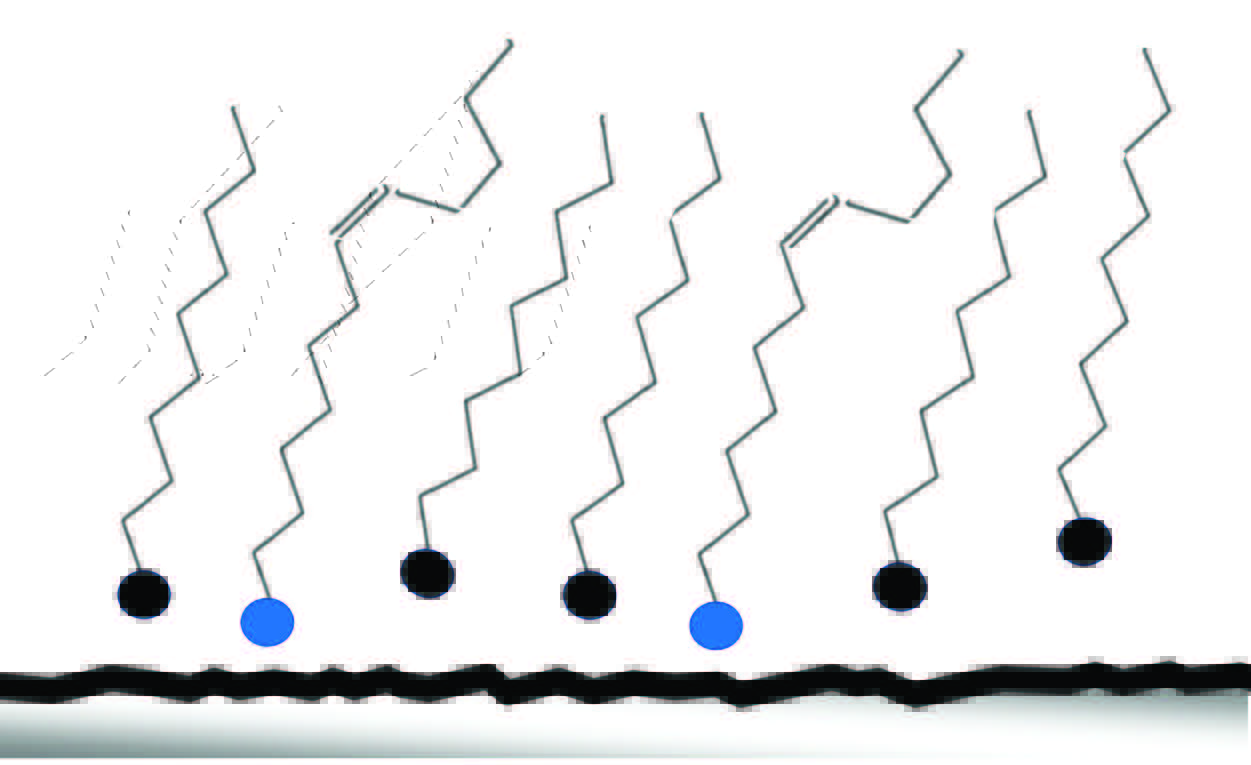
September’s STLE lubrication feature highlighted the surface chemistry of organic and polymeric friction modifiers.
These molecules reduce friction by adsorbing or reacting at contacting surfaces. Their performance depends on:
- molecular polarity;
- chain length;
- surface coverage;
- temperature;
- lubricant polarity;
- competition with other additives;
- stability under repeated shear.
Additive Interaction
Friction modifiers do not operate in isolation. They may compete with ZDDP, detergents and dispersants for access to the metal surface.
The final friction response therefore depends on:
adsorption + molecular packing + tribochemical reaction + additive competition
This is particularly important for low-viscosity engine oils, where boundary-friction control must compensate for reduced hydrodynamic film thickness.
Further reading: STLE — Organic and polymeric friction modifiers
11. Practical Tribology: Elastomer Seal Friction and Wear
TriboNet published a practical guide on elastomer seals during the week, covering friction, stick-slip, lubrication, surface texture, material selection, installation and failure analysis.
Seal performance depends on maintaining a difficult balance:
- sufficient contact pressure to prevent leakage;
- limited friction to reduce heat and energy loss;
- adequate lubrication without loss of sealing;
- surface texture capable of retaining lubricant;
- material compatibility with the operating fluid.
Common Failure Path
poor lubrication or surface mismatch → rising friction → local heating → elastomer damage → leakage
Seal tribology is therefore a system problem involving the elastomer, counterface, lubricant, pressure, temperature and motion.
Further reading: TriboNet — Friction and Wear of Elastomer Seals
12. Events and Professional Updates
44th Polish Tribology Conference
The 44th Polish Tribology Conference took place in Gdańsk from 8–11 September 2026. Its programme included lubricant and coating development, electrified tribology, high-temperature testing, friction, wear and surface engineering.
TriboNet Webinar: Tribology in Industry
TriboNet hosted “Tribology in Industry” by Kuldeep Mistry on 11 September 2026 at 15:00 CET, providing an industry-oriented view of tribological application and problem-solving.
World Tribology Congress Approaches
The 8th World Tribology Congress was scheduled for 20–25 September 2026 in Rio de Janeiro, Brazil. Major themes include:
- sustainable tribology;
- artificial intelligence;
- biotribology;
- coatings and surface engineering;
- lubrication;
- contact mechanics;
- wear;
- electrified systems.
The programme also includes an STLE track on Artificial Intelligence for Smart Tribology and Lubrication Engineering.
Further reading: World Tribology Congress 2026 and TriboNet webinars
Weekly Outlook
The central message from 7–12 September was that tribology is becoming increasingly connected to supply-chain resilience and real-time intelligence.
Three developments deserve continued attention:
- Crude and base-oil availability: Brent approaching US$100/bbl increases the probability of further lubricant-price adjustments.
- Embedded monitoring: Instrumented bearings demonstrate how condition monitoring is moving from indirect machine-level measurement towards direct observation of the tribological contact.
- Predictive wear science: Friction signals are increasingly being treated as multidimensional diagnostic data rather than a single averaged coefficient.
The wider direction is clear:
better sensing + stronger data interpretation + circular lubricant management + interface-focused material design
References and Further Reading
- Reuters — Oil nears US$100 as fresh Middle East strikes raise supply risks
- Base Oil News — Global base oils and lubricants market intelligence
- Base Oil News — Global base-oil supply surplus shrinks
- Base Oil News — PETRONAS Lubricants India and Tata Motors used-oil recycling pilot
- Base Oil News — Valvoline Global Operations to acquire Luval S.A.
- JobbersWorld — Commercial lubricant and HDEO price developments
- JobbersWorld — Univar Solutions and LANXESS distribution agreement
- SKF — SKF Insight bearing technology and Sentea collaboration
- Friction — Transition from lubricated to abrasive wear
- STLE — Asphalt Tribology
- STLE — Organic and polymeric friction modifiers
- STLE — September 2026 Tribology & Lubrication Digest
- World Tribology Congress 2026
- TriboNet — News, webinars and tribology resources
0 Comment