







Rough Contact Problem Solution with TriboSolver
Introduction Note: if you have any comments or questions, please contact us via email: [email protected]. Any bug/improvements reports are appreciated. Contact between two rough surfaces is the fundamental problem in contact mechanics and tribology. These contacts occur in bearings, gears,...
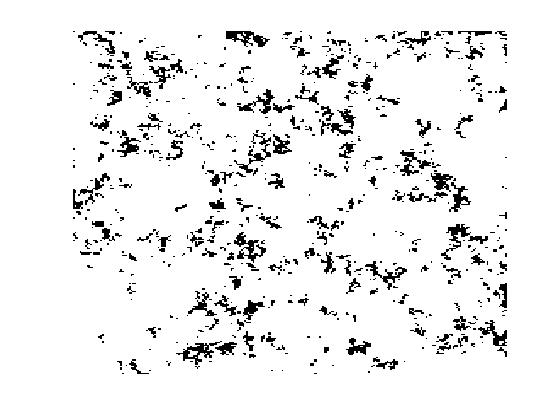
Contact Area Calculation Tutorial: Boundary Element Based Model vs. Asperity Based Model
In contact mechanics and tribology it is frequently needed to calculate the contact area between rough surfaces to estimate possible slip, friction, electric conductivity, etc. In this tutorial, it will be shown how to perform this calculation using a freely...


A very simple estimate of adhesion with rough surfaces based on a bearing area model
Here we present an abstract to the paper addressing a simplified model for adhesion between hard rough solids. Abstract In the present note, we suggest a single-line equation estimate for adhesion between elastic (hard) rough solids with Gaussian multiple scales...

Some open problems in adhesion (of rough surfaces)
By M.Ciavarella, A. Papangelo. Politecnico di BARI, Italy. Adhesion for ‘‘soft’’ bodies shows instabilities like in the simple case of a single sinusoid even in the so called JKR regime (Johnson 1995) which leads to hysteretic behavior. Hence, for very...