








TriboNet Weekly: Global Tribology, Lubrication & Surface Engineering Intelligence May 25-30, 2026

Week: 25 May – 30 May 2026
⚡ Top 5 Signals This Week
- Synthetic lubricant supply became a major global concern as Group III base-oil shortages intensified due to Middle East disruptions and refinery constraints.
- Oil markets experienced extreme volatility, with Brent fluctuating between ~US$91–100/bbl during the week amid changing U.S.–Iran negotiation signals.
- Hydrogen-engine tribology research advanced significantly, with new studies showing moisture-driven wear acceleration in piston ring–cylinder liner systems.
- Advanced nano-additives demonstrated major friction reduction performance, including a 36% coefficient-of-friction reduction in high-load lubrication tests.
- Surface passivation research for hydrogen systems showed strong potential for improving coating durability in hydrogen infrastructure applications.
Executive Summary

The week of 25–30 May 2026 was dominated by oil-market instability and its direct impact on lubricant supply chains.
The most important industry development was growing concern over shortages of Group III base oils, which are critical for:
- synthetic engine oils,
- EV lubricants,
- industrial synthetic fluids,
- high-performance hydraulic systems.
Simultaneously, tribology research strongly focused on:
- hydrogen-compatible lubrication,
- nano-additive technologies,
- low-friction coatings,
- advanced surface engineering.
The week highlighted a growing reality:

Energy security is now directly influencing tribology strategy.
1. Oil & Lubricant Industry Intelligence
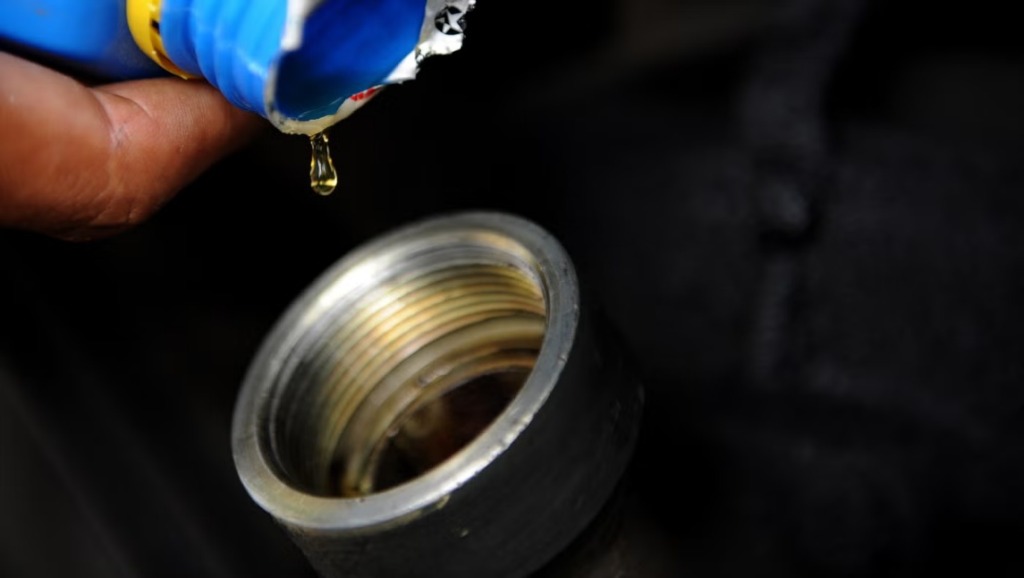
Synthetic Lubricant Supply Tightens
Major lubricant suppliers warned of continuing pressure on synthetic lubricant availability through 2027 due to disruptions in Group III base-oil supply chains.

Key Numbers
| Metric | Value |
| Middle East share of US Group III imports | ~44% |
| South Korea share of imports | ~30% |
| Synthetic oil drum prices | US$300–400 → US$1,000 |
| Oil-change cost increase estimate | Up to 40% |
Tribology Impact
Industrial users accelerated:
- lubricant life-extension programs,
- contamination monitoring,
- oil condition analysis,
- synthetic lubricant conservation strategies.

Oil Price Volatility
Weekly Oil Movement
| Date Trend | Brent |
| Early week | ~US$100/bbl |
| 29 May | US$91.54/bbl |
| Weekly direction | Highly volatile |
Key Drivers
- U.S.–Iran negotiations
- Strait of Hormuz concerns
- Shipping security risks
- Refinery supply uncertainty
Tribology Impact
Oil-price instability is increasing focus on:
- energy-efficient lubrication,
- lower-friction drivetrains,
- predictive maintenance,
- reduced lubricant consumption.
2. Hydrogen Tribology Breakthroughs
Hydrogen Engine Wear Mechanisms Identified
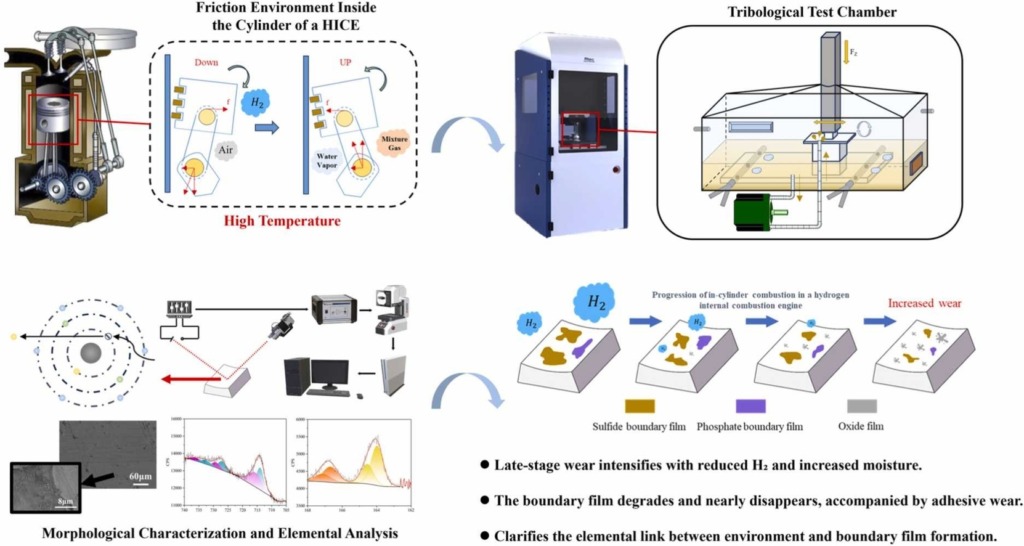
A major Tribology International study published this week investigated lubrication behavior in hydrogen internal combustion engines.
Key Findings
| Observation | Result |
| Moisture generation | Increased |
| Boundary-film stability | Reduced |
| Late-stage wear | Increased |
| Surface degradation | Accelerated |
Engineering Significance
Researchers found that as hydrogen combustion progresses:
- water concentration rises,
- protective films weaken,
- wear rates increase.
Tribology Impact
Hydrogen engines will require:
- new additive chemistry,
- advanced coatings,
- optimized ring-liner materials,
- hydrogen-specific lubrication strategies.
Link: https://www.sciencedirect.com/science/article/pii/S0301679X26001258
3. Nano-Lubrication Technology
New High-Load Nano-Additive Shows Strong Performance
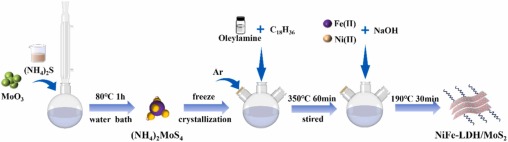
Researchers reported a new NiFe-LDH/MoS₂ nano-additive system capable of significant friction reduction under high-load conditions.
Performance Results
| Parameter | Result |
| Friction reduction | 36% |
| Coefficient of friction | 0.066 |
| Test temperature | 75°C |
Why It Matters
The nano-additive improved lubrication through:
- rapid surface adsorption,
- tribochemical film formation,
- enhanced load-carrying capability.
Potential Applications
- industrial gearboxes,
- heavy equipment,
- wind turbines,
- high-load bearings.
Link: https://www.sciencedirect.com/science/article/pii/S0301679X26000204?utm_source=chatgpt.com
4. Hydrogen Coating Technology
Surface Passivation Research Advances
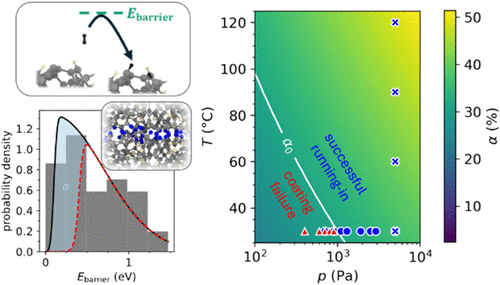
New ACS research published this month demonstrated improved understanding of hydrogenated amorphous carbon (a-C:H) coatings used in hydrogen systems.
Key Discovery
Researchers showed hydrogen exposure can:
| Effect | Result |
| Surface passivation | Improved |
| Friction stability | Improved |
| Running-in behavior | Better controlled |
| Coating durability | Enhanced |
Tribology Impact
This is important for:
- hydrogen compressors,
- hydrogen pumps,
- fuel-cell systems,
- hydrogen transport infrastructure.
Link: https://pubs.acs.org/doi/10.1021/acsaenm.6c00126?utm_source=chatgpt.com
5. AI & Tribology Industry Update
The STLE Emerging Trends Report continued influencing industry discussions throughout the week.
Reported Capabilities
| Technology | Performance |
| Robotic tribometers | 432 tests/day |
| Nanoparticle screening | 150 million materials/chip |
Industry Impact
AI is increasingly being applied to:
- lubricant formulation,
- wear prediction,
- tribology simulations,
- automated experimentation.
The tribology industry is rapidly moving toward:
AI-assisted materials discovery.
6. Surface Engineering Research
Macromolecular Friction Research Expands
Researchers reported new insights into friction mechanisms at flowing solid–liquid interfaces using molecular-scale imaging techniques.
Key Observation
Different surface chemistries showed major changes in:
- molecular friction behavior,
- adsorption dynamics,
- interfacial flow response.
Why It Matters
Potential future applications include:
- biomedical tribology,
- microfluidics,
- polymer lubrication,
- nanoscale surface engineering.
Weekly Industry Snapshot
| Segment | Direction |
| Oil markets | Volatile |
| Synthetic lubricants | Supply pressure |
| Hydrogen tribology | Rapid growth |
| Nano-additives | Strong innovation |
| Surface coatings | Advancing |
| AI tribology | Expanding |
| Predictive maintenance | Increasing |
Engineering Insight of the Week
Lubricant Supply Security Is Becoming a Reliability Issue
The biggest lesson from this week is that lubricant availability itself is becoming a strategic engineering concern.
Plants increasingly need:
- lubricant inventory planning,
- oil-condition monitoring,
- extended drain strategies,
- contamination control systems.
The focus is shifting from:
“How often should we change oil?”
to
“How do we maximize lubricant life without increasing wear?”
References
- Reuters Oil Market Coverage
- BP Governance & Oil Market Update
- Global Stocks Rise Amid US-Iran Deal Hopes
- Synthetic Oil Cost Surge Report
- US Synthetic Oil Supply Risk Through 2027
- NiFe-LDH/MoS₂ Nano-Lubrication Research
- Hydrogenated Carbon Coating Passivation Study
- Hydrogen Engine Tribology Study
- STLE Emerging Trends Report 2026
- STLE Trends Report Release
- Macromolecular Tribology Research
0 Comment