







Can we select the desirable material using AI?
Introduction
The selection of materials for various applications is crucial and these materials are influenced by friction and wear in distinct ways. Advances in artificial intelligence (AI) and machine learning (ML) have enabled the visualization and classification of wear particles using image identification techniques. By analyzing micrographs captured through various microscopic methods, AI can assess key characteristics such as particle size, texture, shape, and colour. This is essential in understanding where wear occurs, the nature of wear particles (metallic or oxide), and the underlying causes, such as fatigue or abrasion [1].
Example for tool wear monitoring
One of the notable applications of AI-driven image processing is in tool wear monitoring. Researchers have demonstrated how a microscopic imaging system could track wear on cutting tools used in machining processes. AI-based image processing can analyze tool wear by applying a processing parameter descriptor to microscope images. By positioning the microscope at a fixed point on a milling machine, a baseline for “new” material was established, allowing for accurate wear assessment over time. Using a tool shape descriptor (TSD), critical wear areas, particularly along the cutting edges, were identified and quantified. These studies highlight how direct sensor-based image processing offers a reliable and efficient approach for monitoring tool wear in conventional machining, improving maintenance strategies and prolonging tool lifespan.
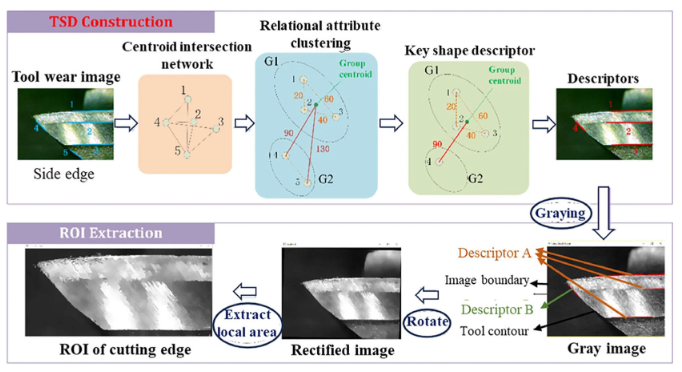
Figure-1 Extraction of the tool wear ROIs using a TSD [2]

How can AI assist in material selection
- Optimizing Coating and Alloy Composition – AI can assist in selecting and optimizing metal alloys and vapor-deposited hard coatings based on factors like thickness, composition, and hardness to enhance wear resistance.
- Material Performance Prediction – Machine learning models analyze wear behavior over time, helping industries predict how different materials will perform under varying conditions, leading to better material selection.
- AI-Driven Wear Analysis – AI examines how materials degrade due to friction and wear, allowing for the identification of the best materials for specific applications based on real-world performance data.
- Reducing Experimental Costs in Material Testing – Artificial Neural Networks (ANN) can predict material wear rates without extensive physical testing, making material selection more efficient and cost-effective.
- Validating Material Suitability for Different Environments – ANN models can simulate how materials will behave under different loads, environments, and time frames, ensuring that selected materials meet the required durability and performance standards.
How does it work?
1. Data Analysis and Feature Extraction
Feature engineering is one of the most challenging aspects of ML in material science. It involves selecting, constructing, and optimizing input variables to improve model accuracy. AI and ML techniques rely on materials data and informative landscapes to extract meaningful insights about material properties and wear behavior. Large datasets, such as open quantum materials databases, are used to develop predictive models. For example, researchers have used ML to predict thermodynamic stability in material composites, which helps in optimizing material composition for better wear resistance.
2. Multiscale Modelling

Multiscale modelling integrates AI and ML with computational material science to study materials at different length and time scales. This allows researchers to predict how materials behave under different wear conditions. AI-driven modelling enables faster materials exploration and design, reducing reliance on time-consuming experimental testing. ML algorithms help identify key material features related to wear resistance, aiding in the selection of optimal materials for specific applications.
3. Predictive Simulations for Wear and Friction
ML techniques can simulate Multiphysics and multiscale interactions, offering insights into how materials respond to different loads, environments, and wear conditions. AI models can quantify and predict material wear, supporting the development of more durable and wear-resistant materials. These techniques are also useful for improving measurement devices, ensuring accurate monitoring of material wear over time.
4. Experimental and Simulation Data Integration

ML can combine experimental data and simulation results to uncover relationships between material structure and wear behavior. By applying AI, industries can develop optimized coatings and alloys tailored for specific operational conditions, enhancing performance and longevity.
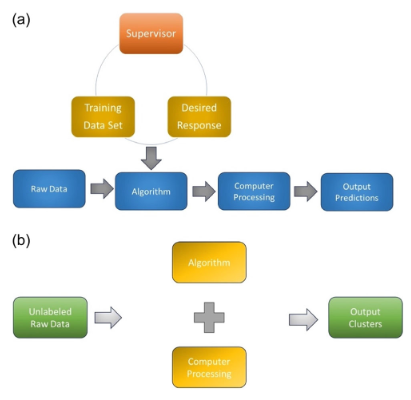
Figure-2 Schematic representation of the necessary steps to implement a) supervised and b) unsupervised learning algorithms
Conclusion
AI and ML significantly improve friction, lubrication, and wear modelling, enabling precise material selection and surface engineering. These advanced predictive tools help optimize material performance, ensuring durability and efficiency in complex systems. By accurately predicting wear and maintenance needs, AI and ML reduce unexpected failures and downtime. This proactive approach enhances productivity and lowers costs, benefiting industries through better maintenance planning and resource optimization.
References
[3] https://www.jhuapl.edu/news/news-releases/240806-ai-driven-materials-discovery-national-security
0 Comment