








Use of PEEK in various applications
Introduction
Polyetheretherketone (PEEK) is an ultra-high-performance polymer known for its outstanding wear resistance, which makes it a material of choice in various tribological applications. However, PEEK’s inherently high coefficient of friction (COF) can limit its effectiveness in demanding environments. To overcome this limitation, researchers have explored the incorporation of various reinforcing fillers to enhance its tribological performance. These reinforcements—ranging from fibers to nanofillers, in both single and hybrid forms—have shown significant potential in improving the friction and wear behavior of PEEK. These reinforced PEEK polymers could be used in various applications such as biomedical devices, protective coatings, and bearing systems.

Figure-1 The overall insights on the scope, application, drawback and features of PEEK [1]
Actors affecting PEEK
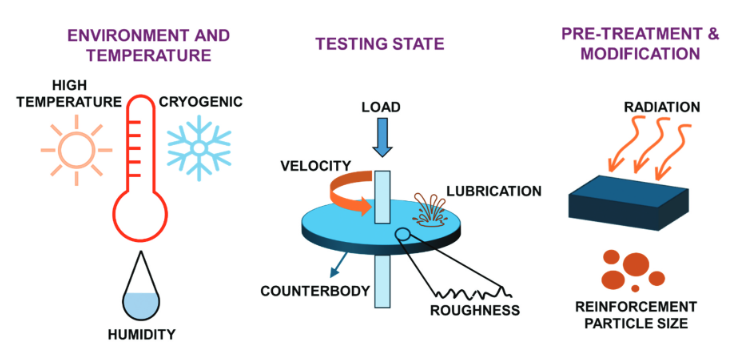
PEEK is widely used in many tribological applications, however, its COF typically falls within the range of 0.25–0.35, which is relatively high compared to other self-lubricating polymers such as PTFE. This value can vary significantly depending on several factors, including surface roughness, applied load, sliding speed, temperature, counterface material, and environmental conditions, as schematically presented in Figure 2. Hence there is a need for reinforcement.

Figure-2 Factors affecting the tribological properties of PEEK [1]
Commonly used materials for PEEK reinforcement
PEEK can be significantly enhanced through the incorporation of various reinforcements and each of this offers unique benefits depending on the material type. Fibrous materials such as carbon fiber and glass fiber are commonly used to improve wear resistance, mechanical strength, and thermal stability. Solid lubricants like PTFE and molybdenum disulfide contribute to self-lubrication and synergistic wear performance, with MoS₂ also boosting thermal conductivity. Ceramic and metal fillers, including silicon carbide and aluminum oxide, enhance wear resistance—particularly under high temperatures—with Al₂O₃ effectively reducing wear rates but offering limited self-lubrication. Nanomaterials such as carbon nanotubes and graphene have shown promising results even at low concentrations, leading to improved overall tribological performance and making them suitable for high-performance and biomedical applications. The schematic is listed in Figure-3.
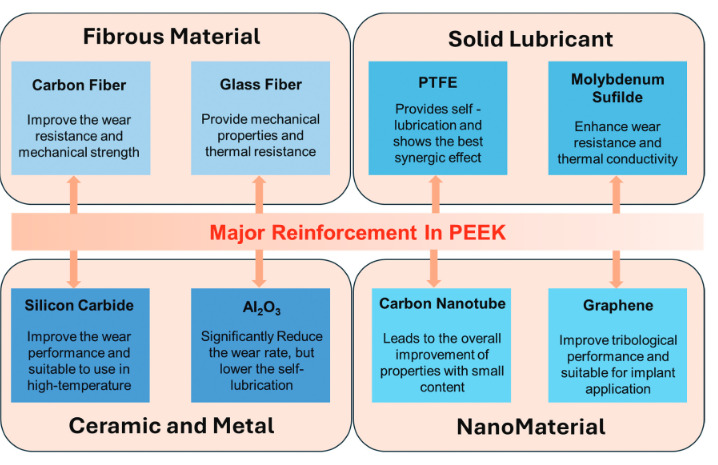

Figure-3 Commonly used filler materials for PEEK [1]
Reference
0 Comment