








Unleashing the Hidden Potential of Recycled Plastics in Tribology – Part 2: Polypropylene
The problem with polypropylene recycling
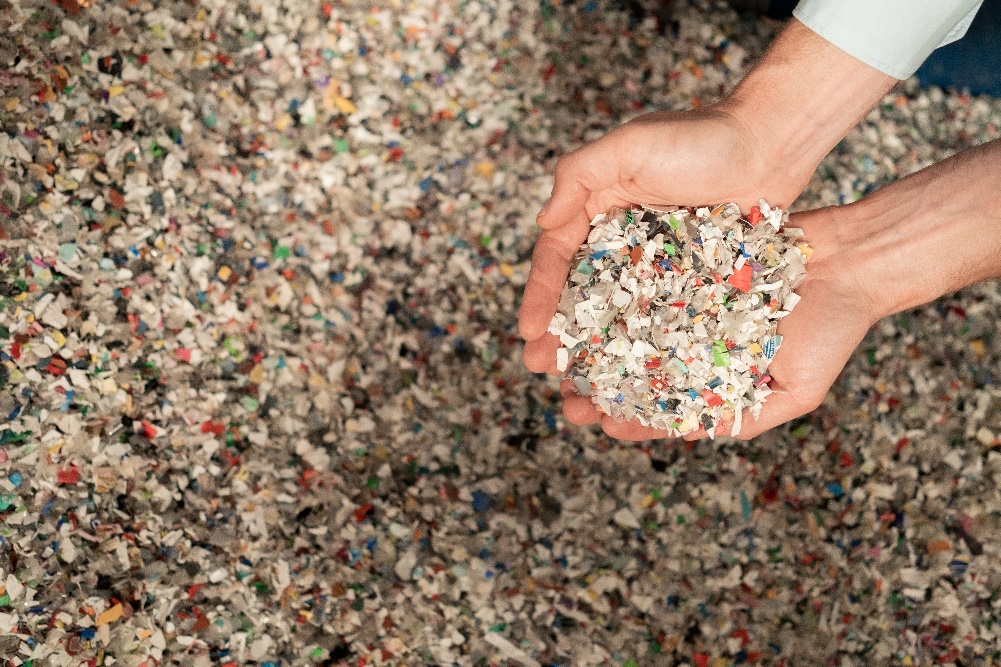
Polypropylene (PP; ♻️ 5) is all around us. It is found in diverse applications ranging from takeaway containers to car bumpers. Despite being one of the most produced polymers globally, PP lags behind in recycling. A mere 1% of post-consumer PP makes its way into new products. Reprocessing— i.e., adding the sorted, shredded and washed plastic into an extruder—is a crucial step in recycling, and it affects the mechanical and flow properties of the recycled material. Broadly speaking, compared to virgin PP, recycled PP is less stretchy and breaks easily, and recycled PP flows faster in melt. For instance, to produce PP takeaway containers at the rate of 100s per minute by injection moulding, the material needs to flow fast in the melt, almost like water. On the other hand, to produce a pipe by extrusion, the material should flow slowly in melt, almost like honey. The virgin PPs that flow like honey, start to flow more like water after reprocessing. These changes affect the process and the product that can be made out of a particular material, and in most cases relegates recycled PP to specific applications such as reinforcing cement matrices.
Reprocessing: a bane for others, a boon for tribology
Recycled PP shines in the world of tribology, the science of friction and wear. Our latest study reveals that reprocessing of PP induces structural changes that lead to a staggering tenfold reduction in wear in some cases. We think that the secret lies in the structural alterations induced by reprocessing. Spherulites are small, round structures that form in plastic as it cools down, influencing the plastic’s strength and properties. Small spherulites, a result of reprocessing, minimize defects and enhance fracture properties. These changes lead to a significant improvement in tribological performance, without using any additional nucleating agents to achieve the same effect.
Right application at the right time
This discovery serves as a proof-of-concept, showcasing how intelligent material flow decisions during cycling can exponentially expand the potential of recycled PP. As we look to meet ambitious recycling targets, this study offers a glimmer of hope, showcasing that with the right approach, we can unlock the hidden potential of recycled plastics. With smart recycling decisions, we can redefine the role of recycled plastics and pave the way for a greener tomorrow.
Read the article on Sustainable Materials and Technologies (open access):

Raghuram, H., Seier, M., Koch, T., Jones, M. P., & Archodoulaki, V. M. (2023). Smart design choices provide new applications for recycled polypropylene: The case for tribology. Sustainable Materials and Technologies, e00745. https://doi.org/10.1016/j.susmat.2023.e00745
0 Comment