








TriboNet Weekly: Global Tribology, Lubrication & Surface Engineering Intelligence | Aug 31–Sep 5, 2026
Week: 31 August–5 September 2026
Weekly Key Takeaways
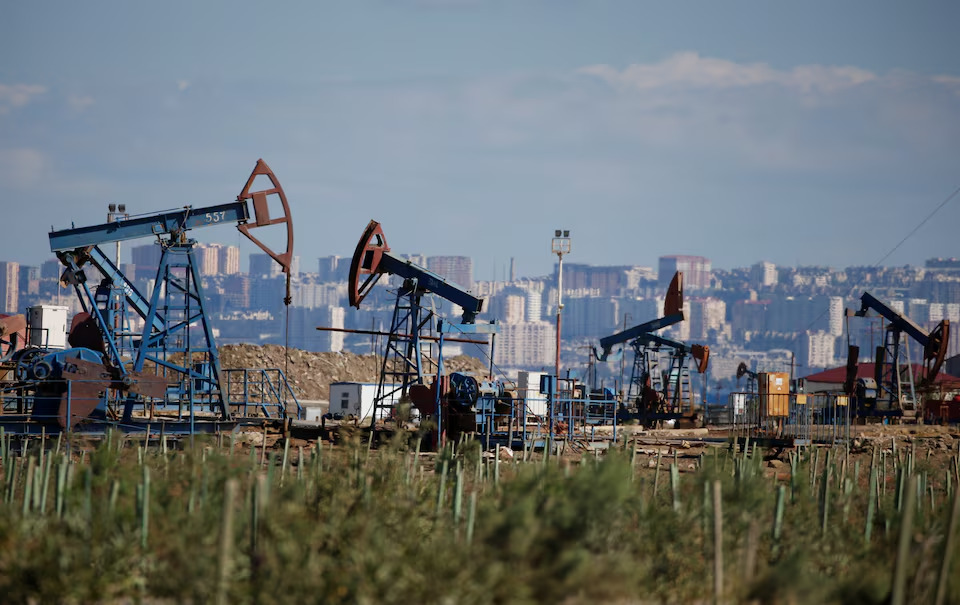
- Oil-market volatility intensified sharply. Renewed US–Iran fighting pushed Brent above US$94/bbl and WTI above US$90/bbl on 1 September, increasing uncertainty throughout the lubricant value chain.
- Refineries operated at exceptionally high utilisation. US refinery utilisation reached approximately 98%, its highest level since August 2018, while crude inventories declined by 4.5 million barrels.
- Physical supply risk remained concentrated around the Strait of Hormuz. Tanker movements reportedly fell well below their recent average during renewed hostilities, keeping crude, base-oil and additive supply chains exposed.
- Plasma surface engineering received major industrial attention. PSE 2026 brought together developments in plasma-assisted coatings, surface modification, vacuum tribology and advanced surface characterisation.
- Hydrogen tribology continued expanding. Research on PEEK composites demonstrated the growing need to validate polymers, seals and bearing materials under representative hydrogen environments and extended sliding distances.
- Machine learning moved deeper into lubrication design. New work combined multiscale thermo-elasto-plastic flow modelling with data-driven optimisation of fluid-lubrication performance.
- Ceramic wear resistance may be engineered through defect control. Microscratch research on SrTiO₃ showed that deliberately introduced dislocations and residual stresses can alter cracking and near-surface damage.
- The international tribology community entered a major conference month. September’s programme includes the Polish Tribology Conference, SwissTribology, TriboNet’s “Tribology in Industry” webinar and the World Tribology Congress in Rio de Janeiro.
1. Global Oil Market
Market Snapshot

| Factor | Weekly status | Tribology/lubricant impact |
| Brent crude | Rose to US$94.65/bbl on 1 Sep and US$95.63/bbl on 2 Sep | ↑ Feedstock and transport uncertainty |
| WTI crude | Rose to US$90.22/bbl on 1 Sep and US$91.01/bbl on 2 Sep | ↑ North American formulation costs |
| Weekly Brent increase on 1 Sep | US$4.16/bbl; 4.6% | ↑ Rapid cost volatility |
| Weekly WTI increase on 1 Sep | US$4.46/bbl; 5.2% | ↑ Refining and distribution pressure |
| Strait of Hormuz | Tanker movement remained restricted | ↑ Physical supply risk |
| US crude inventories | Down 4.5 million barrels | ↑ Sensitivity to further disruption |
| US refinery utilisation | Approximately 98% | Limited spare processing capacity |
| Chinese demand | Relatively weak compared with earlier levels | ↓ Partial demand-side relief |
The week began with a sharp repricing of geopolitical risk. On 1 September, Brent increased by US$4.16, or 4.6%, to settle at US$94.65/bbl. WTI rose by US$4.46, or 5.2%, to US$90.22/bbl.
The following day, Brent settled at US$95.63/bbl and WTI at US$91.01/bbl. Both contracts moved through wide intraday ranges as markets reacted to renewed military activity and uncertainty surrounding Gulf exports.
Why Tribologists Should Care
Daily crude movements do not translate directly into equivalent finished-lubricant price changes. However, prolonged instability affects:

- refinery operating decisions,
- base-oil availability,
- synthetic hydrocarbon feedstocks,
- additive manufacturing,
- energy-intensive processing,
- packaging and transportation,
- finished-lubricant pricing.
The pressure becomes particularly important for high-performance formulations requiring Group III base oils, PAOs, esters or specialised additives.
Tribology Impact
The relevant industrial pathway is:
geopolitical disruption → crude volatility → refinery economics → base-oil availability → formulation cost → finished-lubricant price


Further reading: Reuters—Oil rises by more than US$4 amid renewed US–Iran fighting
2. Strait of Hormuz Remains a Critical Lubricant-Supply Risk
The Strait of Hormuz remained central to energy-market uncertainty during the week. Reuters reported that only four vessels passed through the strait during one monitored period, compared with a ten-day average of approximately 13 vessels.

Even when crude oil remains physically available elsewhere, disruption at a major shipping route can produce secondary effects through:
- longer transportation routes,
- higher marine-insurance costs,
- delayed feedstock deliveries,
- refinery scheduling difficulties,
- regional shortages,
- higher freight charges.
Lubricant Industry Implication
Lubricant production requires more than crude availability. Base oils and additives must be processed, transported, blended, packaged and distributed. Interruption at any stage can constrain particular lubricant grades even when headline crude inventories appear adequate.
Products most vulnerable to disrupted supply may include:
- high-VI Group III formulations,
- PAO-based industrial oils,
- low-viscosity automotive lubricants,
- aviation turbine oils,
- marine lubricants,
- specialised compressor and refrigeration oils.
Engineering Message
The main risk is no longer only the price of a barrel of crude. It is the resilience of the entire chain required to convert feedstock into application-qualified lubricant.
Further reading: Reuters—Oil settles higher as renewed strikes threaten supplies
3. US Refineries Operate Near Maximum Utilisation
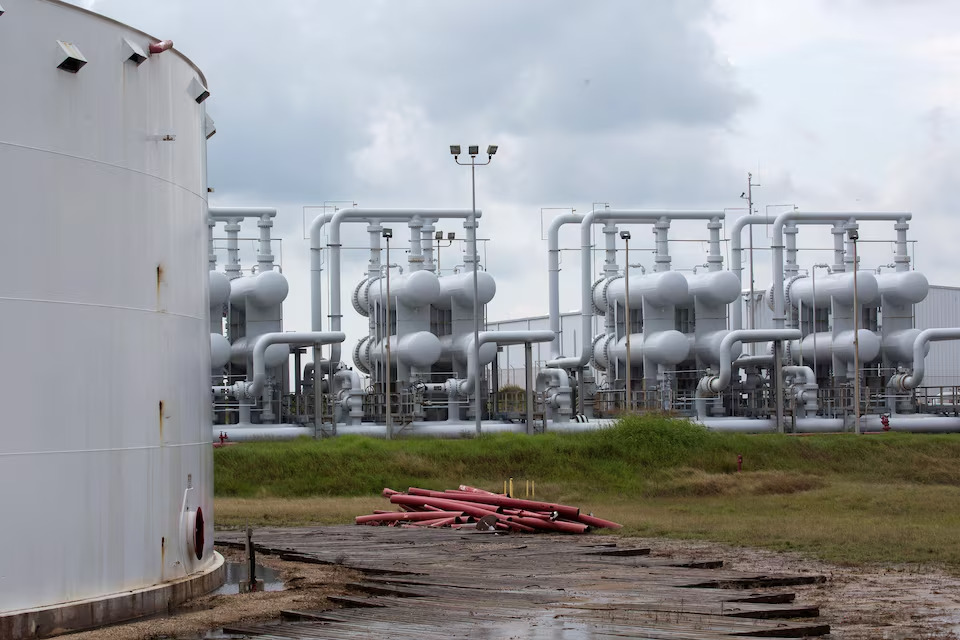
US commercial crude inventories declined by 4.5 million barrels, reaching approximately 424.5 million barrels for the week ending 28 August. The reduction was substantially larger than the 1.1-million-barrel decline anticipated in a Reuters analyst survey.
US refinery utilisation simultaneously increased to approximately 98%, the highest recorded since August 2018. Crude exports rose by around 691,000 barrels per day, reaching approximately 4.5 million bpd.
| Indicator | Reported value |
| US crude inventory change | −4.5 million barrels |
| Total commercial crude inventory | 424.5 million barrels |
| Expected inventory change | −1.1 million barrels |
| Refinery utilisation | ~98% |
| Crude exports | ~4.5 million bpd |
| Weekly export increase | ~691,000 bpd |
| Gasoline inventory change | −1.2 million barrels |
| Distillate inventory change | +0.8 million barrels |
Why It Matters
High refinery utilisation indicates strong processing activity, but it also means that little spare capacity is available to absorb:
- unplanned maintenance,
- equipment failures,
- feedstock interruption,
- severe weather,
- further geopolitical disruption.
For lubricants, refinery configuration is also important. High fuel output does not necessarily guarantee proportional growth in base-oil supply because refiners may prioritise higher-margin transportation fuels.
Reliability Perspective
Operating refineries at high utilisation places additional demands on:
- pumps,
- compressors,
- bearings,
- seals,
- turbines,
- heat exchangers,
- process lubricants and hydraulic systems.
Condition monitoring, contamination control and lubricant management become especially important when downtime has a high economic cost.
Further reading: Reuters—US crude stocks fall amid strong refining activity
4. China’s Demand Influence Becomes Increasingly Important
The week also highlighted the growing influence of Chinese demand on international petroleum markets. Market commentary indicated that changes in China’s crude purchasing, refining activity and stockbuilding can offset or amplify supply-side disruption.
Market Relationship
The emerging balance can be represented as:
Gulf supply risk + restricted shipping + high refining demand
versus
weaker Chinese consumption + strategic inventories + non-OPEC production
From a lubricant perspective, China influences multiple parts of the value chain:
- crude purchasing,
- base-oil demand,
- additive and chemical manufacturing,
- industrial lubricant consumption,
- electric-vehicle production,
- shipping and export demand.
Industry Insight
China’s influence is not limited to consuming petroleum. Its manufacturing activity also affects the demand for metalworking fluids, hydraulic oils, greases, gear oils and specialty process lubricants.
Further reading: Reuters—China’s influence on global energy markets
5. PSE 2026 Places Plasma-Engineered Surfaces in the Spotlight
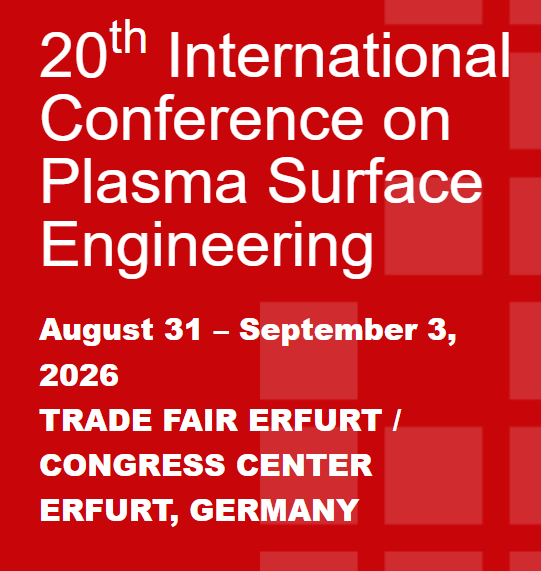
The 20th International Conference on Plasma Surface Engineering, held from 31 August to 3 September 2026, brought together researchers, equipment manufacturers, coating developers and industrial users.
The programme covered technologies including:
- physical vapour deposition,
- plasma-enhanced chemical vapour deposition,
- plasma nitriding,
- ion implantation,
- thermal and plasma spraying,
- thin-film characterisation,
- surface activation,
- tribological testing in controlled environments.
Tribology Significance
Plasma engineering allows the properties of the contact surface to be modified without changing the entire component.
| Surface modification | Potential tribological benefit |
| Increased hardness | Reduced plastic deformation and abrasion |
| Low-shear coating | Lower friction |
| Controlled chemistry | Improved tribofilm formation |
| Diffusion treatment | Greater load support |
| Multilayer architecture | Crack deflection and damage tolerance |
| Improved adhesion | Reduced coating delamination |
| Tailored surface energy | Controlled lubricant wetting |
Industrial Applications
Plasma-engineered surfaces are increasingly relevant to:
- cutting tools,
- aerospace components,
- bearings and gears,
- forming dies,
- fuel-injection systems,
- biomedical implants,
- hydrogen-handling equipment,
- vacuum and space mechanisms.
Engineering Message
The strongest coating is not automatically the best tribological coating. Successful performance depends on:
coating properties + substrate support + interface adhesion + environment + contact mechanics
Further reading: PSE—International Conference on Plasma Surface Engineering
6. Hydrogen Tribology: PEEK Composites Under Long-Distance Sliding
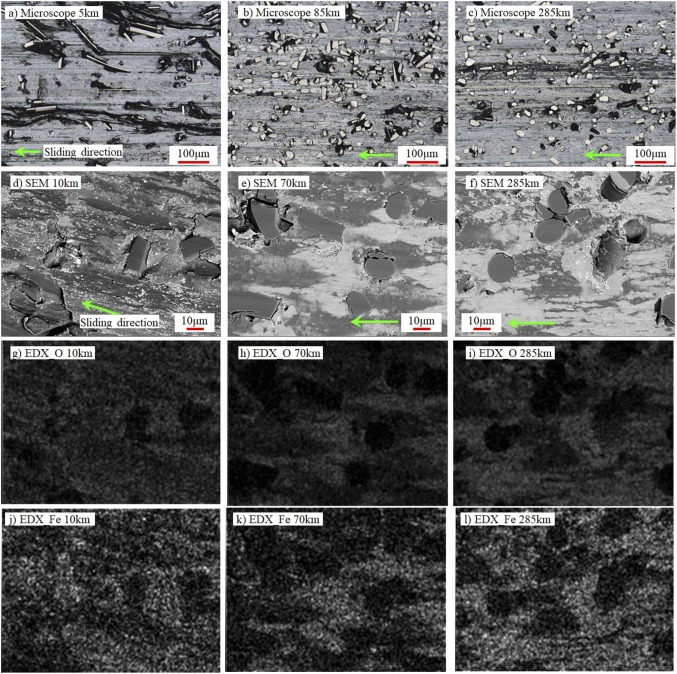
Research highlighted in the September 2026 issue of Tribology International investigates the friction and wear of PEEK composites during long-distance sliding in hydrogen.
PEEK and PEEK-based composites are attractive for hydrogen applications because they offer:
- low density,
- chemical resistance,
- temperature resistance,
- dimensional stability,
- potential for dry running,
- compatibility with lightweight seals and bearing elements.
However, hydrogen exposure can alter the behaviour of the complete polymer–counterface system.
Why Long-Distance Testing Matters
Short tribological tests may primarily capture running-in. Extended sliding is needed to evaluate:
- transfer-film stability,
- progressive filler exposure,
- counterface modification,
- debris accumulation,
- friction transitions,
- long-term wear rate.
The operating response can be represented as:
polymer composition → transfer-film formation → counterface coverage → friction stability → long-term wear
Hydrogen-System Relevance
The findings are relevant to:
- compressors,
- valves,
- piston rings,
- seals,
- dry-running bearings,
- hydrogen refuelling equipment,
- storage and transport systems.
TriboNet Takeaway
A polymer composite qualified in air should not automatically be considered qualified for hydrogen. Representative atmosphere, pressure, temperature and sliding distance must be included in the validation process.
Further reading: Tribology International—Friction and wear of PEEK composites in hydrogen
Link: https://www.sciencedirect.com/science/article/pii/S0301679X26003270#fig0025
7. Technology Outlook
| Technology | Maturity | Current momentum |
| Predictive lubrication | High | ★★★★★ |
| Plasma surface engineering | High | ★★★★★ |
| Hydrogen tribology | Medium–High | ★★★★★ |
| Hybrid physics–AI modelling | Medium | ★★★★★ |
| Polymer composites for hydrogen | Medium | ★★★★☆ |
| Dislocation-engineered ceramics | Emerging | ★★★★☆ |
| Additively manufactured tribomaterials | Medium | ★★★★★ |
| Surface–additive co-design | Medium–High | ★★★★☆ |
| Digital condition monitoring | High | ★★★★★ |
| Tribofilm-centred design | Medium–High | ★★★★★ |
8. Events & Conferences Watch
September is one of the most active months in the 2026 international tribology calendar.
44th Polish Tribology Conference
8–11 September 2026 — Gdańsk, Poland
The conference brings together work on friction, wear, lubrication, machine elements, surface engineering and tribological testing.
Event information: 44th Polish Tribology Conference
3rd International Conference on Mathematical Modelling in Mechanics and Engineering
10–12 September 2026 — Belgrade, Serbia and online
The programme covers mechanical engineering, computational mechanics, materials, biomechanics, modelling and artificial intelligence.
Event information: ICME 2026
SwissTribology 2026
11 September 2026
The event appears on the TriboNet calendar among the upcoming international tribology meetings.
Event information: TriboNet Events Calendar
Tribology in Industry — TriboNet Webinar
11 September 2026, 15:00 CET — Online
Kuldeep Mistry will discuss the application of tribological principles within industry.
Registration: TriboNet—Tribology in Industry
8th World Tribology Congress
20–25 September 2026 — Rio de Janeiro, Brazil
The World Tribology Congress will bring together academic and industrial specialists across:
- friction and wear,
- lubrication,
- surface engineering,
- computational tribology,
- biotribology,
- nanotribology,
- machine elements,
- sustainable and net-zero technologies.
The programme includes plenary lectures, keynote presentations, technical sessions, exhibitions and international networking.
Event information: WTC 2026 official website
Young Tribologists Grant—TRiboSurf’26
Application period: 1–15 September 2026
The grant supports eligible young researchers seeking to attend the International Conference on Tribology and Surface Science in Trabzon, Türkiye.
Event information: TRiboSurf’26
Engineering Insight of the Week
From Surface Properties to Near-Surface-System Design
The strongest technical message across this week’s developments is that tribological performance cannot be predicted from hardness, lubricant viscosity or coating composition alone.
- PEEK composites depend on transfer-film stability in hydrogen.
- Heat-treated steel depends on its interaction with friction-modifier chemistry.
- Plasma coatings depend on substrate support and interfacial adhesion.
- Ceramics depend on dislocation structure, residual stress and crack evolution.
- Fluid lubrication depends on coupled pressure, temperature, deformation and flow.
- Additively manufactured materials depend on processing history and surface finishing.
The modern tribological design pathway is therefore:
bulk material → subsurface structure → surface chemistry → environment → lubricant/tribofilm → functional performance
rather than:
hardness → wear
This shift allows the complete near-surface region to be treated as an engineered functional system.
Weekly Quantitative Snapshot
| Metric | Approximate value |
| Brent settlement, 1 September | US$94.65/bbl |
| Brent daily increase, 1 September | 4.6% |
| WTI settlement, 1 September | US$90.22/bbl |
| WTI daily increase, 1 September | 5.2% |
| Brent settlement, 2 September | US$95.63/bbl |
| WTI settlement, 2 September | US$91.01/bbl |
| US crude-inventory decline | 4.5 million barrels |
| Total US commercial crude inventory | 424.5 million barrels |
| US refinery utilisation | ~98% |
| US crude exports | ~4.5 million bpd |
| Reported vessels passing Hormuz during monitored period | 4 |
| Recent ten-day vessel average | ~13 |
| SrTiO₃ dislocation-density range | ~4 orders of magnitude |
| Microscratch diamond-tip diameter | 30 µm |
| PSE 2026 | 31 Aug–3 Sep |
| World Tribology Congress | 20–25 Sep 2026 |
Weekly Summary
The week of 31 August–5 September 2026 connected global energy-market instability with emerging developments in materials and interface engineering.
At the industrial level, renewed conflict surrounding Iran and the Strait of Hormuz pushed Brent above US$94/bbl and WTI above US$90/bbl. US crude inventories declined by 4.5 million barrels while refinery utilisation reached approximately 98%, leaving limited spare capacity to absorb further disruption. For lubricant manufacturers, the main concern remains the combined effect of crude volatility, refinery priorities, base-oil availability, additive supply and transportation cost.
Surface engineering received particular attention through PSE 2026. Plasma coatings, diffusion treatments and advanced surface-analysis technologies demonstrated how industrial components are increasingly being designed from the interface inward.
Research developments reinforced the same message. Hydrogen-environment studies highlighted the importance of long-term polymer transfer films; coupled modelling and machine learning offered new routes to fluid-lubrication optimisation; and oxide microscratching showed that controlled dislocation structures can modify ceramic cracking.
Additive manufacturing further challenged conventional material definitions by showing that composition, processing history, porosity, orientation and post-processing collectively determine tribological performance.
Attention now turns toward a busy international calendar culminating in the 8th World Tribology Congress in Rio de Janeiro from 20–25 September 2026.
References & Further Reading
- Reuters—Oil prices rise more than US$4 on renewed US–Iran fighting, 1 September 2026
- Reuters—Oil settles higher as renewed strikes threaten supplies, 2 September 2026
- Reuters—US crude stocks fall amid strong refining activity and exports
- Reuters—China’s influence on global energy markets
- PSE—International Conference on Plasma Surface Engineering
- Tribology International—Volume 221, September 2026
- International Tribology Council—Conferences and Meetings
- 44th Polish Tribology Conference
- ICME 2026—International Conference on Mathematical Modelling in Mechanics and Engineering
- TriboNet—Tribology Events Calendar
- TriboNet—Tribology in Industry Webinar
- World Tribology Congress 2026—Official Website
- TRiboSurf’26—International Conference on Tribology and Surface Science
0 Comment